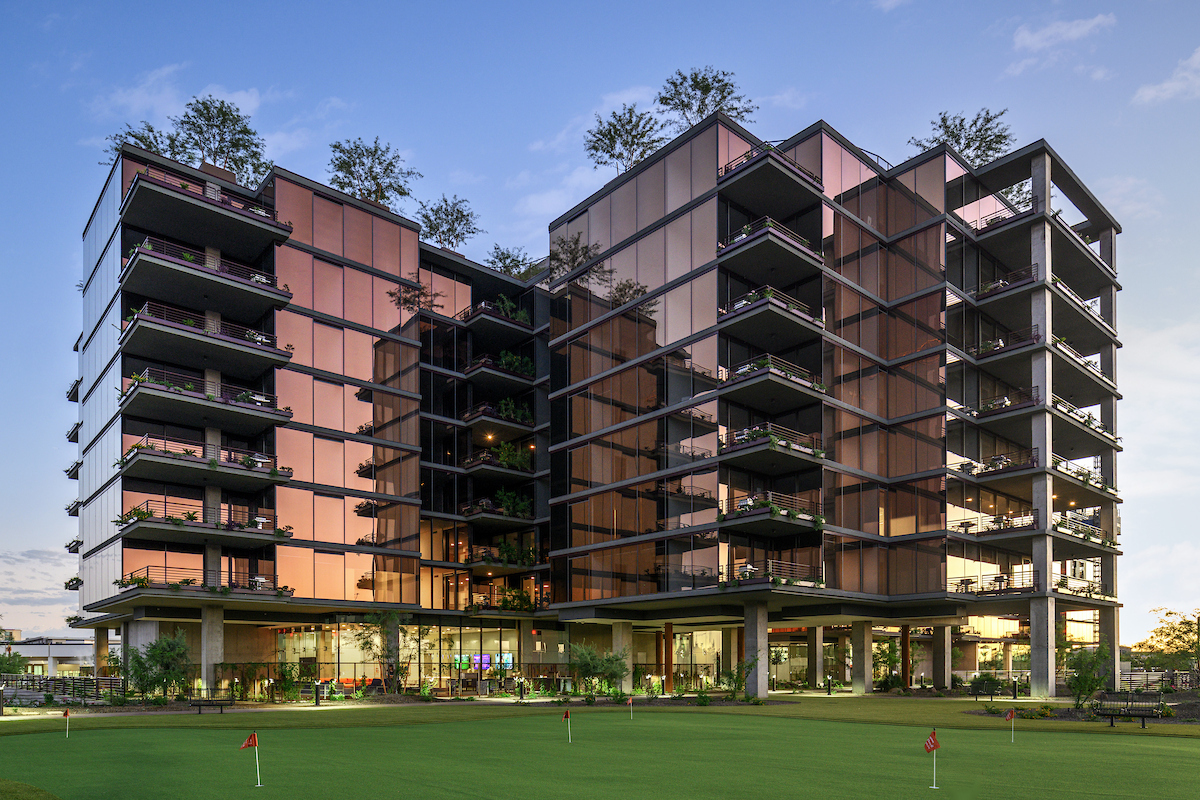
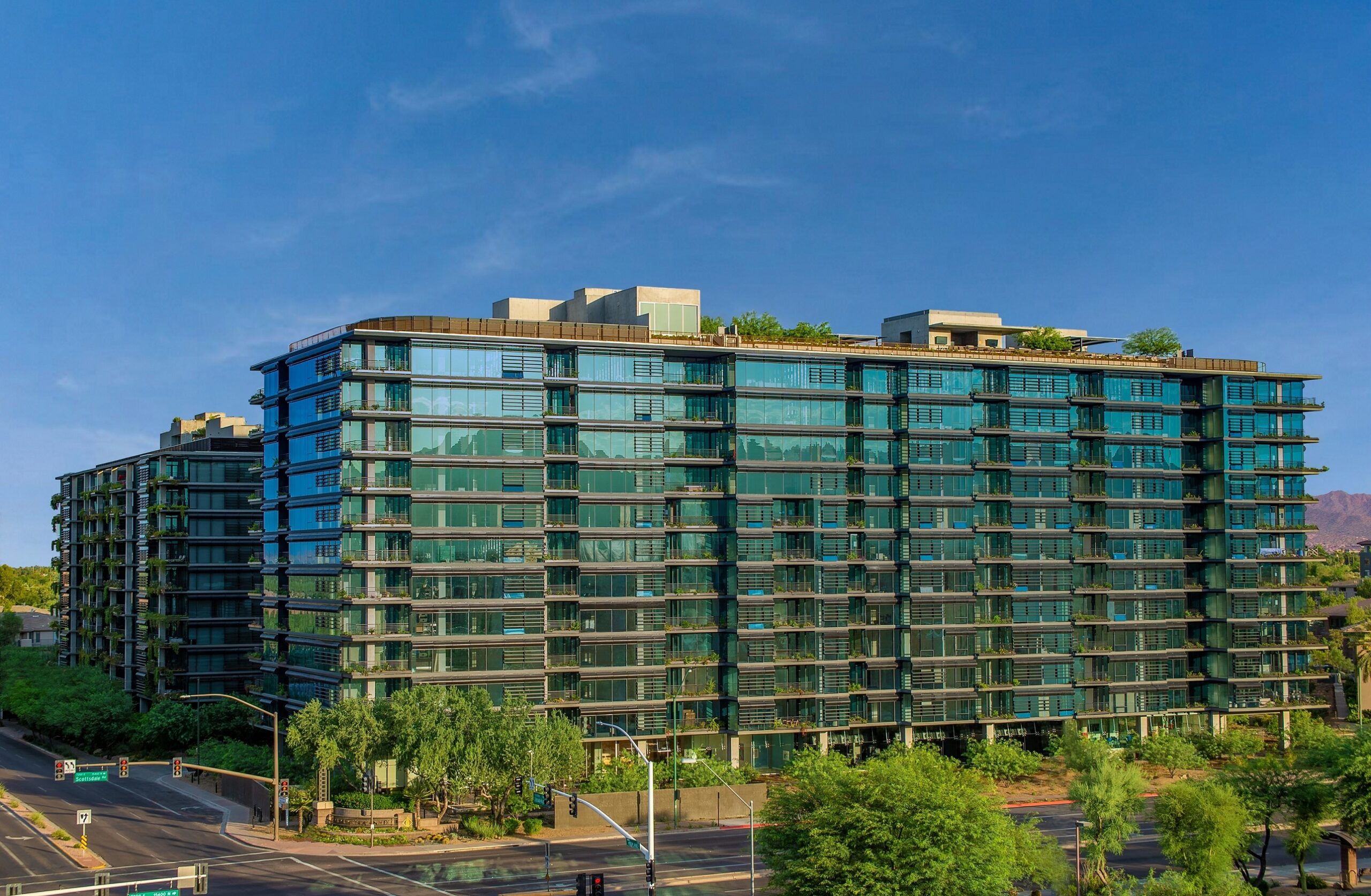
PHOENIX — Luxury real estate firm Optima announced Wednesday the grand opening of 7190 Optima Kierland in North Scottsdale.
The building is the fifth and final tower within the Optima Kierland development, according to a press release.
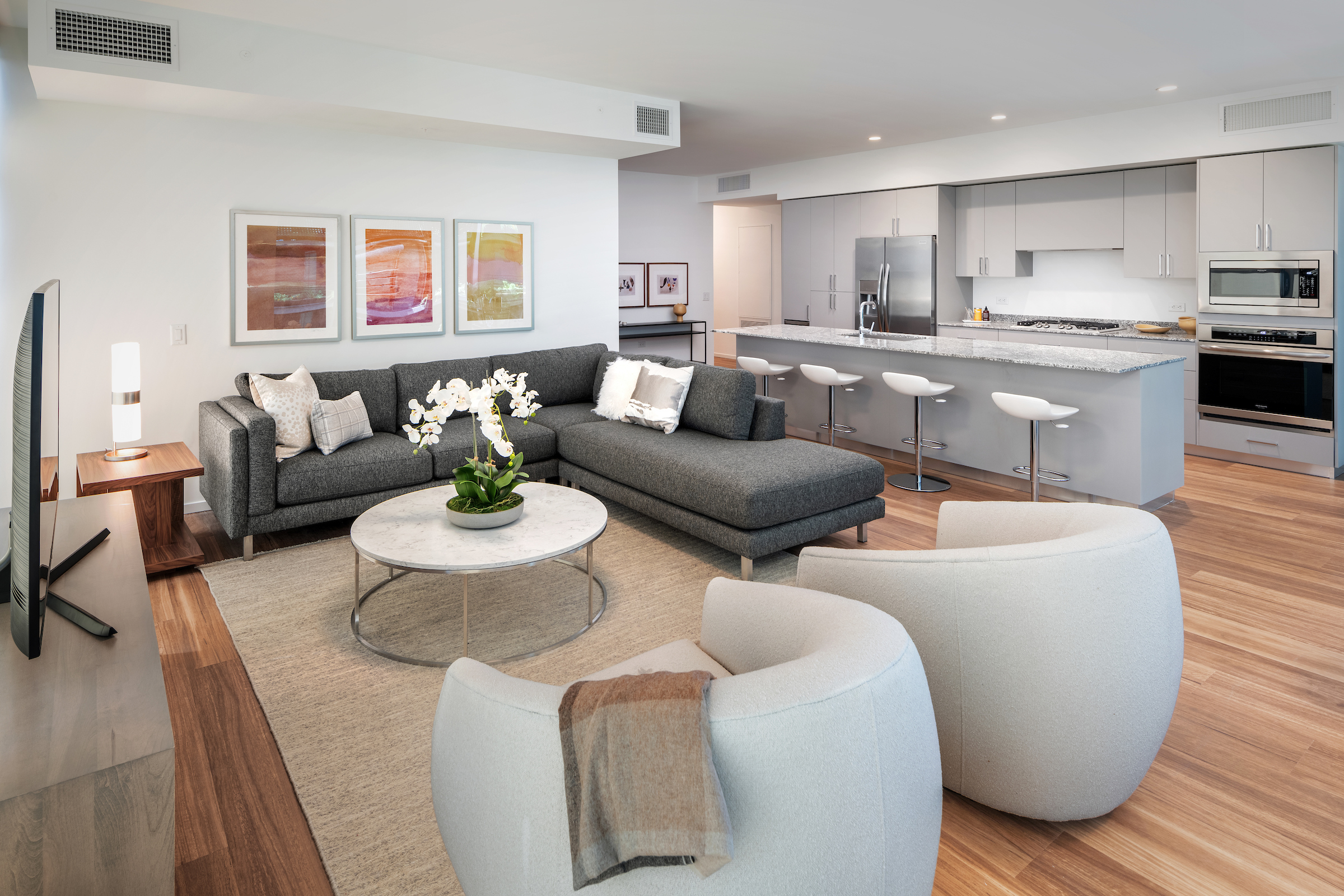
The 10-story tower has 216 residences including, studio, one, two, three-bedroom and penthouse apartments. The apartments range from $2,600 to over $11,000 per month with 30% of units in the building already leased, the press release stated.
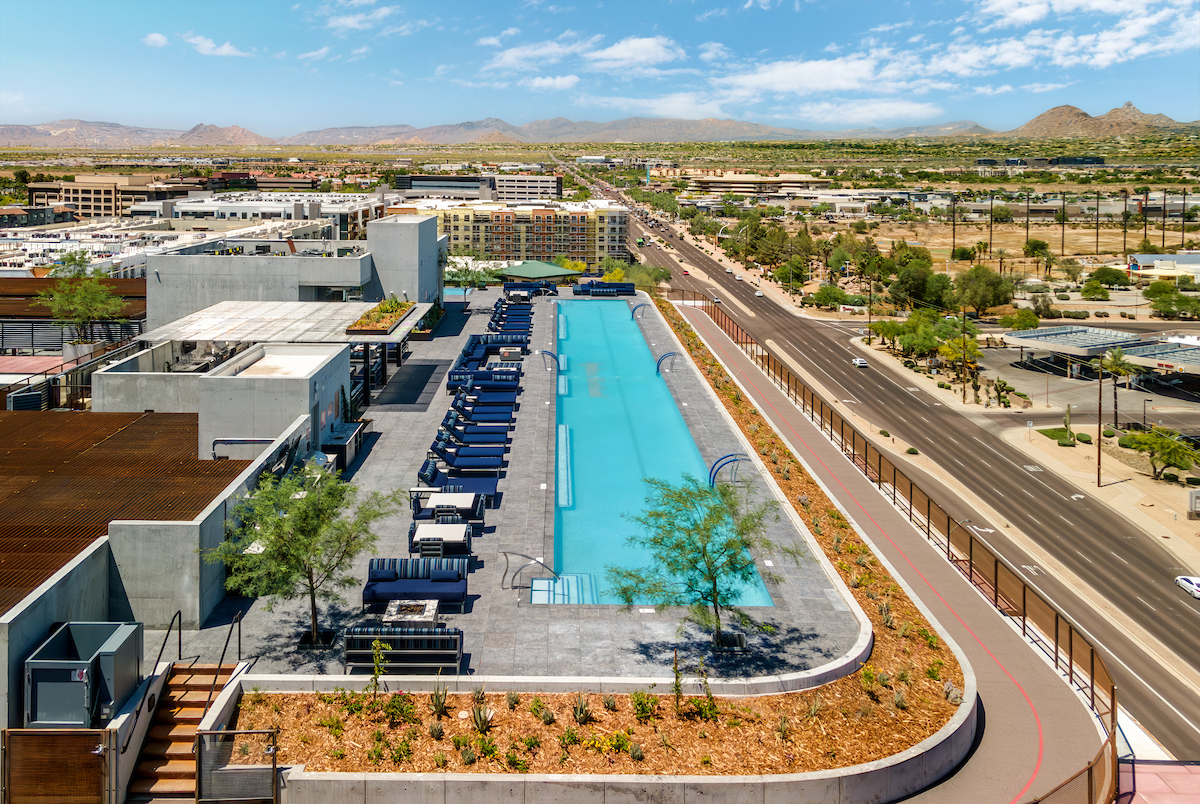
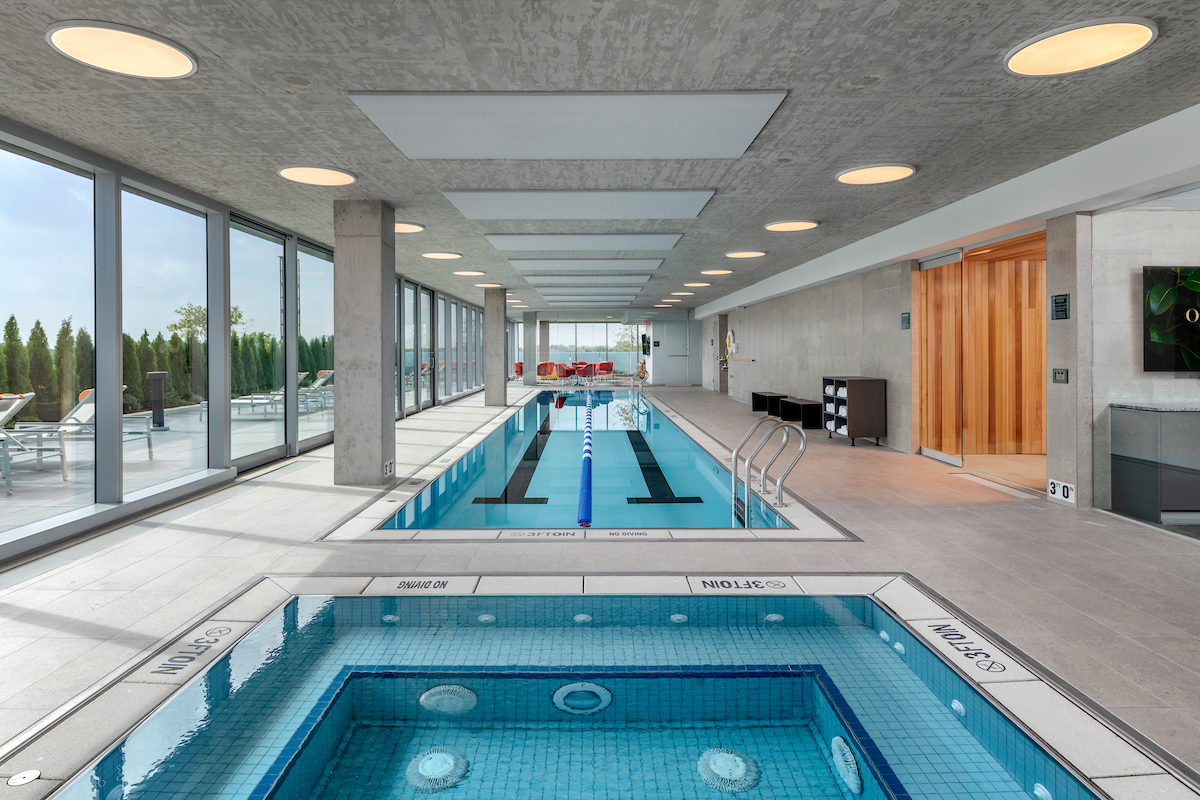
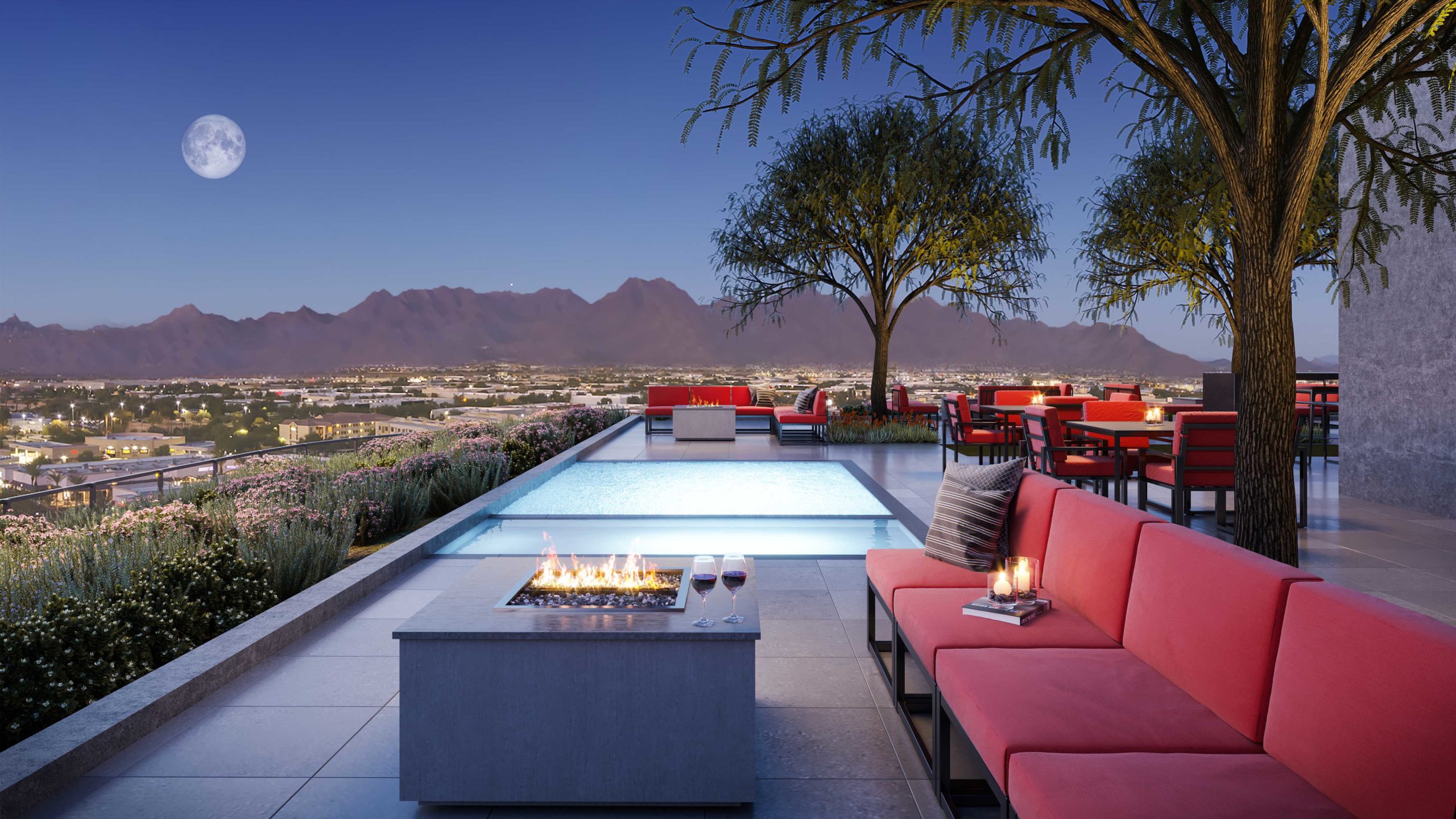
Amenities feature a rooftop sky deck with an Olympic-sized pool, a running track, spa, bar, fitness center and more.
David Hovey Jr., AIA, Optima’s president and COO, said he is excited about the opening of the final building.
“The location will always be highly coveted, but what sets our developments apart has been our dedication to unique architecture, high-quality construction and providing the next evolution of amenities,” Hovey said.
U.S. population growth is slowing and expected to continue declining over the next decade. At the same time, demand for multifamily rental units continues to be robust, a trend Fannie Mae predicts will continue over the long term.
Can both things be true at the same time? They can, say the professionals who keep a close watch on the demographic trends shaping the multifamily industry. Shifting demographic factors—including delayed household formation, aging renters, and lifestyle-driven mobility—are redefining who rents and why. And as developers and investors grow more savvy about parsing their rental pool and technology makes it easier than ever for REITs to align their portfolios using artificial intelligence (AI)-driven demographic strategy, they’re rethinking everything from geographical choices to unit mix to amenity strategies.
Younger generations are waiting longer to form households—the average marriage age has increased more than four years since 1990—while housing costs are driving outsized demand for rentals, says Roberto Casas, senior managing director for JLL. That means the renting population now spans a larger age demographic than it ever has, and this has been a big factor in pushing multifamily from 0% of the Open End Diversified Core Equity Index in 1980 to 32% today, he says.
“Aging demographics and structural changes, such as delayed marriage and a rise in the share of single households, are the biggest changes we’ve come across in both our proprietary data as well as third-party data sources,” says TJ Parker, senior vice president of market research and data analytics for multifamily investment and management firm Bell Partners. “On demographics, we are seeing a flattening of the curve across age cohorts, which means demand is spread out across both younger and older age cohorts.”
As mortgage rates decline, some millennials and Gen Zers will leave the rental market to buy homes, Parker says, but, at the same time, Bell is seeing more demand from older renters who are choosing the convenience of renting over the upkeep of owning a home. “But, of course, real estate is very local in nature,” she adds. “The demographic composition may vary widely across communities and different Bell markets, which adds complexity in terms of providing services that cater to those needs from a property management perspective.”
For Mary Cook, president of Chicago-based design firm Mary Cook Associates, getting demographics right means looking beyond things like average age and income. Cook’s team susses out “the who” of new projects by exploring the area’s key employers, figuring out where people are migrating from, and visiting nearby retail stores and coffee shops.
Cook says she realized, for example, that her design for a property located between Harvard University and the Massachusetts Institute of Technology in Cambridge, Massachusetts, had better be next-level tech savvy when she stumbled across a neighborhood coffee shop with an electric board that displayed how long her order would take based on an algorithm tracking how many people were in the store. For a property in Princeton, New Jersey, proximity to a pharmaceutical company that employed many people from East India prompted Cook’s team to include lock boxes in the mailroom for passports, visas, and green cards.
“The ‘who’ is what informs every aspect of our design, the strategy behind how we dedicate space, and how we prioritize space,” Cook says. “The aesthetic ends up coming last.”
Gen Z: Renting as a Lifestyle
On a macro level, Gen Z—which now comprises 27% of the workforce and 30.5% of all renters—is driving the rental market. Because this cohort had the unfortunate timing of starting their professional lives just as housing costs soared to unattainable levels, about 85% of them are renting, says George Ratiu, vice president of research for the National Apartment Association.
But young adults aren’t renting simply because they can’t afford to buy. Many simply prefer it. In a June poll, Entrata and Qualtrics found that 72% of Gen Zers said they believe renting is financially smarter than owning a home, 83% said renting helps them save for other priorities, and 37% said they prefer the ease of on-call maintenance over the burdens of home ownership.
This generation is also geographically nimble, much more willing than older generations to move in search of a better or more affordable lifestyle. They’ll pay a little more to live in walkable neighborhoods with parks, coffee shops, and restaurants, and they’re flocking to smaller, more affordable metros in the Midwest like Ann Arbor, Michigan; Lincoln, Nebraska; and Des Moines, Iowa—places their parents fled.
Developers are responding to Gen Z demand in these cities with amenity-rich properties in downtown hubs. In Des Moines, Double Eagle Development is building a $50 million, 202-unit complex on an urban infill site near restaurants and a growing entertainment district. In Ann Arbor, 4M recently opened a 216-unit, mixed-use mass timber complex powered by a natural gas fuel cell system and other environmentally friendly features that appeal to climate-conscious Gen Zers.
In addition to location and sustainability, these new developments are targeting tech-native, wellness-oriented Gen Zers with amenities like lightning-fast connectivity, coworking accommodations, and social spaces and programming that build belonging and address mental and emotional well-being. To counteract the amount of time this generation spends on screens, Cook says, Gen Z-focused properties “need to be really activated with all sorts of activity rooms to keep people more engaged with each other.”
Projecting a highly curated, authentic spirit, The Sadie in Fort Worth, Texas, targets those who not only appreciate art and culture but live it in their everyday lives. (Interiors by Mary Cook Associates, developed by Toll Brothers Apartment Living )
Not Your Father’s Senior Housing
Gen Z is not the only flexible, mobile, and digitally fluent generation to embrace renting. Their parents and grandparents—baby boomers—are chasing many of the same amenities, including walkability, access to transit and public services, and climate-responsive and resilient design. As such, boomers have become a desirable growth market for luxury properties.
Make no mistake—the number of 80-plus renters is growing at ever-accelerating rates, pushing net absorption for senior housing to record highs. But Doug Ressler, manager of business intelligence for Yardi Matrix, points out that the pool of potential tenants for senior housing is limited to people who can afford the high price of assisted living. Younger seniors who can’t see themselves moving into age-restricted, health care-oriented housing until they’re 85—if ever—are a ripe market, Ressler says.
Adults in the 65 to 85 age range often have pets and may still be working. They want space, but they don’t want the hassle of maintaining it, which is why they’re a driving force in the growing build-to-rent single-family rental market, Ressler says. They’re also not averse to living among young adults in apartment complexes. “The nature of generational conflict is not near where it used to be,” he says.
“Boomers and Gen Z actually cohabitate pretty well,” Cook says, “because you don’t have the kid factor.”
This trend started to emerge in the early 2010s, when developers who built Class A urban apartments to capture affluent millennials realized a lot of baby boomers were moving in, too, says rental housing economist and consultant Jay Parsons. “That demographic is not necessarily looking for something that’s geared toward a senior adult,” he says. “They’re maybe looking for something that makes them feel younger.”
“Renting has become an increasingly popular option for active seniors who aren’t interested in age-restricted housing but seek a maintenance-free lifestyle in an accessible building,” says David Hovey, president of Optima, a company that designs, develops, builds, and manages multifamily communities in Arizona and Illinois. “With single-level homes and residences with elevators in particularly high demand and short supply, luxury rentals offer a practical and appealing solution with the flexibility and peace of mind to age in place.”
With the number of renter households headed by people 65 and older increasing by more than 1 million between 2019 and 2024, according to a Harvard University Joint Center for Housing Studies report, boomers are lucrative at both the luxury and affordable ends of the market.
“With the oldest baby boomers turning 80 in 2026—an age when more people turn to renting—a wider range of affordable rental options for older adults will be required to accommodate their changing needs,” the report states. “Renting will be an especially attractive option for older adults who want to age in their community, reduce their maintenance responsibilities, and access the shared spaces for social interaction and accessibility features more common in multifamily buildings.”
Scottsdale-based Optima surpassed 55% sold at 7180 Optima Kierland and recently introduced an exclusive, highly curated collection of nine premium penthouses for sale.
As the newest and most elevated high-rise condominium tower at the $500 million Optima Kierland Center, 7180 Optima Kierland, has sold 113 homes since sales began in January 2019. The community leads the Phoenix-metro market for sales velocity when compared to other new condominium developments across the Valley, according to a December 2019 market study by Polaris Pacific.
Amid the sales success, Optima is launching the McDowell Mountain Collection, which includes a limited selection of luxury penthouses prices from $1.1 million. Perched at the pinnacle of the 12-story tower, these penthouses offer unsurpassed views of the McDowell Mountains through the sweeping floor-to-ceiling glass walls, allowing for the ultimate indoor-and-outdoor living experience.
Buyers have the option of choosing from nine homes with three distinct two-to-three-bedroom floor plans ranging from approximately 1,461 to 1,509 square feet.
Poised among the most luxurious penthouses in Arizona, each McDowell Mountain Collection home features an expansive private terrace adorned with lush, hanging greenery and upgraded finishes that can be selected by the buyer.
“With such strong buyer interest in the community, we knew we wanted to offer a collection of homes featuring a distinctive combination of space, design and amenities,” says Optima President and Principal Architect David Hovey Jr., AIA.
Inspired by the surrounding McDowell Mountains, these penthouse homes feature a selection of finishes designed to highlight the desert setting.
“We aim to set the bar for penthouse living here in Arizona.”
One of the strongest draws for buyers at 7180 Optima Kierland has been the array of amenities, including a rooftop Skydeck with Arizona’s first residential rooftop running track, a heated lap pool, a full outdoor bar and kitchen with entertaining spaces, indoor and outdoor theaters, a 16,000-square-foot fitness center, a basketball/pickleball and squash courts.
A joint venture partnership between Optima and Principal Real Estate Investors is developing 7140 Optima Kierland, a multifamily property located within Optima Kierland Center in North Scottsdale.
As the second residential tower within Optima Kierland Center, the 12-story building will feature 213 apartments in a mix of one-, two- and three-bedroom layouts ranging in size from 737 square feet to 2,225 square feet. Units will feature plank flooring, solar shades, floor-to-ceiling glass walls and an outdoor terrace. Residential amenities will include a rooftop pool, lounge and running track; outdoor spa with a steam room, sauna and hydrotherapy; fitness center; cool plunge and hot spa; full-court indoor basketball court; co-working spaces; dog park and pet spa; electronic gaming room; and golf simulator.
Additional amenities will include outdoor spaces with barbeques and fire pits; event and party spaces with retractable glass walls; an outdoor bar, lounge and kitchen; and an indoor theatre and game room.
Construction of the new tower is well underway, with first move-ins scheduled for August.
Nearly 40 Percent Leased Pre-Opening, 7140 Optima Kierland Now Welcoming Immediate Move-Ins With Leasing Gallery and Model Residences Available for Tours
Right on time to meet the recent increase in demand for elevated apartment living in the greater Phoenix-metro area, real estate development firm Optima announced today the opening of the luxury apartment tower 7140 Optima Kierland in North Scottsdale, with immediate move-ins available and the leasing gallery and model residences accessible for private tours.
As the second apartment tower located within Optima Kierland Apartments, 7140 Optima Kierland has already achieved 40 percent leased which outpaces the rental market by nearly double. Comprised of 213 thoughtfully designed, one-, two-, three-bedroom and penthouse residences ranging in size from 737 to 2,225 square feet, monthly rents start from $2,220. The first apartment tower, 7160 Optima Kierland, achieved the fastest leasing rate ever in the Valley in its debut in 2017 and has maintained 95 percent occupancy ever since.
“There is a major trend at play with renters looking to downsize from their single-family homes in favor of the luxury and convenience of the Optima lifestyle, many of whom have relocated from out of state or are considering doing so,” said David Hovey Jr., AIA, president and principal architect of Optima. “With the debut of 7140 Optima Kierland, we’re excited to be able to offer prospective residents a chance to enjoy the community’s unmatched location, services and amenities, and to be able to meet the demand for large, well-appointed apartment homes in the Valley.”
Hundreds of people tuned in Thursday night as AZRE magazine’s 2021 Real Estate Development (RED) Awards were held virtually on the Hopin platform.
“The Real Estate Development Awards — the RED Awards — are the Academy Awards of commercial real estate,” said Michael Gossie, editor in chief of AZ Big Media, which published AZRE. “This year, the only different between the finalists for the RED Awards and the finalists for the Academy Awards is that this year’s RED Awards finalists didn’t show up on Netflix first.”
For years, we’ve seen the race to reach renters often start with a building’s amenity package and the bigger is better mentality, whether it was a pool, a fitness center or, most recently, coworking space.
But living through a pandemic has given everyone a different perspective on amenities. It’s been interesting to see that the things we took for granted, like natural light and outdoor space, have become—and will continue to be—the most important amenities of all.
While many developments made connecting people and nature within built environments and communities a hallmark in recent years, what’s new in 2021 is a heightened demand for direct access to sunlight and fresh air that blends the outdoors and indoors in refreshing ways.
Going forward, we believe design will flow from a need to create environments where renters find inspiration in their natural surroundings while also benefiting from the tangible health benefits that natural light and outdoor space offer.
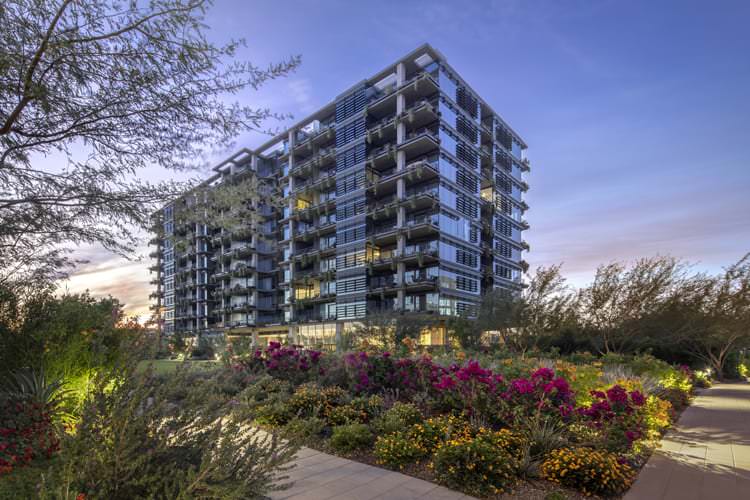
Optima celebrated the grand opening of 7190 Optima Kierland, the fifth and final tower within the Optima Kierland development in North Scottsdale.
The 10-story tower comprises 216 residences including studio, one-, two-, three-bedroom and penthouse apartments, along with the development’s first Olympic-length pool and 24-hour concierge. The amenity-rich building has already been met with high demand, achieving 30% leased even before residents moved in.
The final tower features a rooftop sky deck with a 50-meter Olympic-length lap pool, as well as a quarter-mile running track, spa and cold plunge, lounge seating, fire pits, outdoor bar and kitchen with televisions, and views of the McDowell Mountains.
Additional amenities include an indoor basketball court; an outdoor pickleball court; an expansive indoor/outdoor fitness center with state-of-the-art cardio and fitness equipment, free weights, a yoga studio and a Pilates studio; an indoor golf simulator; a sports lounge; and an outdoor putting and chipping area.
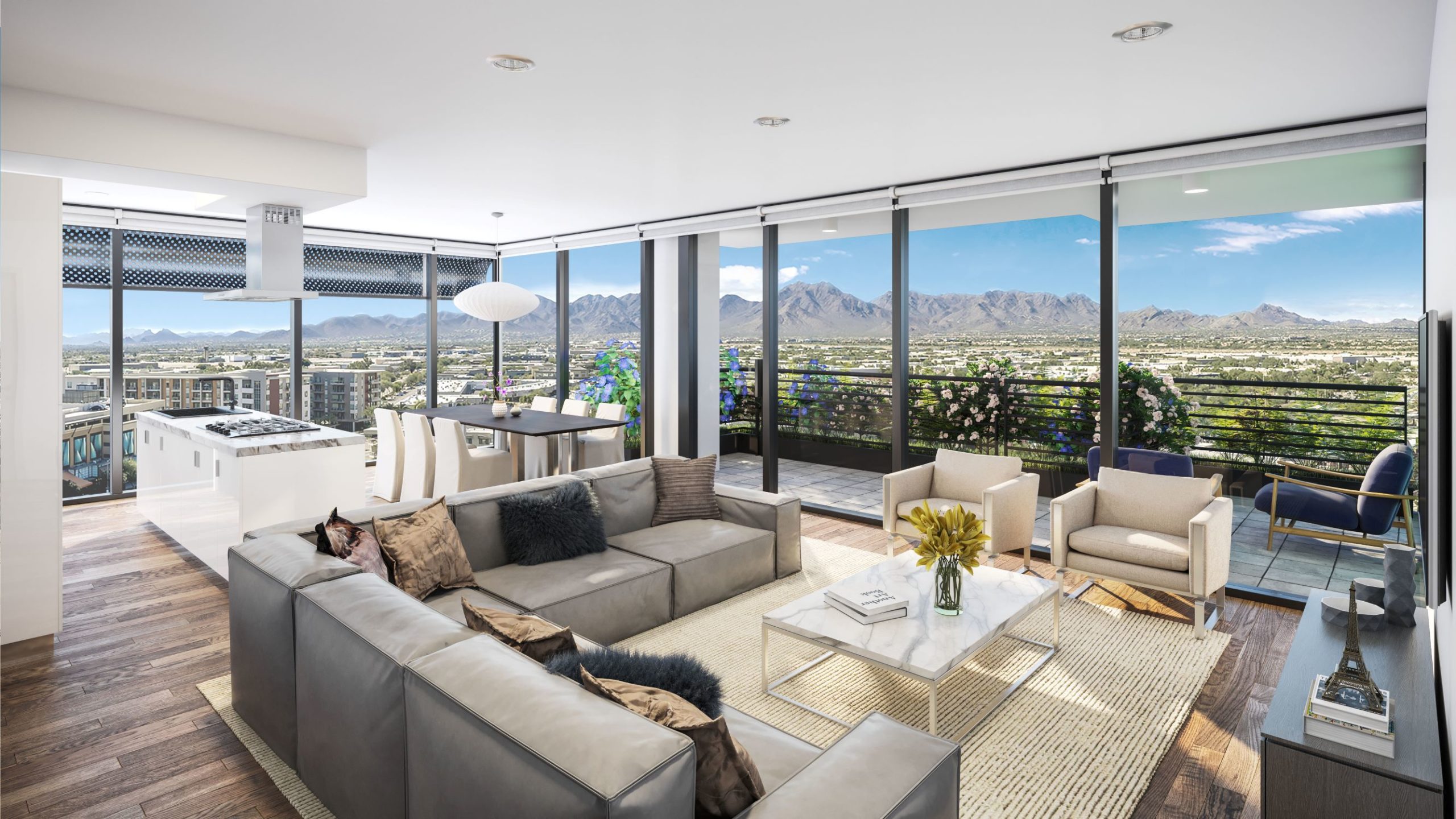
The apartments, which range from $2,600 to over $11,000 per month, are complete with high-quality designer materials and fixtures, floor-to-ceiling windows, gourmet kitchens, spa-quality bathrooms and smart-home technology.
7190 Optima Kierland features fire pits and grills on the terraces of the three-bedroom and corner two-bedroom residences.
Residents will have access to a 24-hour concierge as well as Optimized Service, which offers complimentary white-glove services within each resident’s home, including in-home package delivery, grocery delivery and plant watering, available seven days a week. Additionally, residents will be able to utilize Optima Kierland’s 24/7 Virtual Personal Assistant. This virtual concierge is available by phone, email or text to provide customized assistance with reservations, travel and tickets.
Sustainable features include the efficient architectural shading system comprising louvers and curved, perforated panels, as well as the advanced building materials utilized to maximize the tower’s longevity such as a post-tension concrete structure, aluminum sunscreens and louvers, and floor-to-ceiling windows.
7190 Optima Kierland is near Scottsdale Quarter and Kierland Commons.
Earlier this year, rental housing economist and consultant Jay Parsons parsed renter data released by multifamily REITs and found income levels rivaling those of middle-class homeowners—Equity Residential reported typical renter income of $169,000; Essex Property Trust, $131,000; and Camden Property Trust, $120,000—and rent-to-income ratios ranging from 19% to 22%.
This data proves that developers and policymakers need to update their perceptions about who today’s renters are and why they rent, Parsons says. “The bottom line is that there are a lot of people who are making good incomes and want to be renters.”
The Harvard University Joint Center for Housing Studies found that the number of renter households with incomes of $75,000 or more has risen 43%, to 13.5 million, since 2010. The number of affluent renters is also growing in 35 of the 50 most populous U.S. metros, according to a Redfin analysis of the U.S. Census Bureau, MLS, and county records. In San Jose, California, and Orlando, Florida, about 11% of renters are wealthy; in New York and Seattle, approximately 10% are, the analysis found.
Jessica Perri, marketing director for residential property developer and manager Habitat, says the assumption that people see renting primarily as a transitional phase before homeownership has shifted. More residents are choosing to rent long term because it better aligns with their financial goals, lifestyle, and desire for flexibility, she says.
“This shift has challenged us to think beyond traditional property management and to create communities where renters can truly put down roots, build connections, and feel invested in where they live,” Perri says.
Optima president David Hovey says renters by choice are drawn as much by a sense of community as they are to concierge support, in-home package delivery, and private chefs. Optima is meeting those needs with things like expansive residents’ clubs, rooftop decks, and reservable guest suites.
“For many, what begins as a practical and often temporary decision to rent evolves into a long-term lifestyle preference,” Hovey says.
The newest luxury condominium 12-story tower at Optima Kierland Center in Scottsdale is 7180 Optima Kierland. It offers 202 one-, two-, and three-bedroom homes and expansive penthouses, with close to half of the remaining residences still available for purchase.
“Homeowners are drawn tot he maintenance-free lock-and-leave lifestyle offered at the community,” said David Hovey Jr., president and principal architect for Optima. “The development is managed by a full-time on-site property management company that oversees all aspects of managing the property including package services, a virtual concierge and security services during select off-business hours.” The building, Hovey said, “remains safe and secure when residents are traveling or away, featuring secured entry to all buildings with video entry cameras and key-fob entry access required for all doors and elevators.”
The community features a park-like setting with extensive landscaping, a rooftop Skydeck and a heated lap pool. Prices start in the $500s.