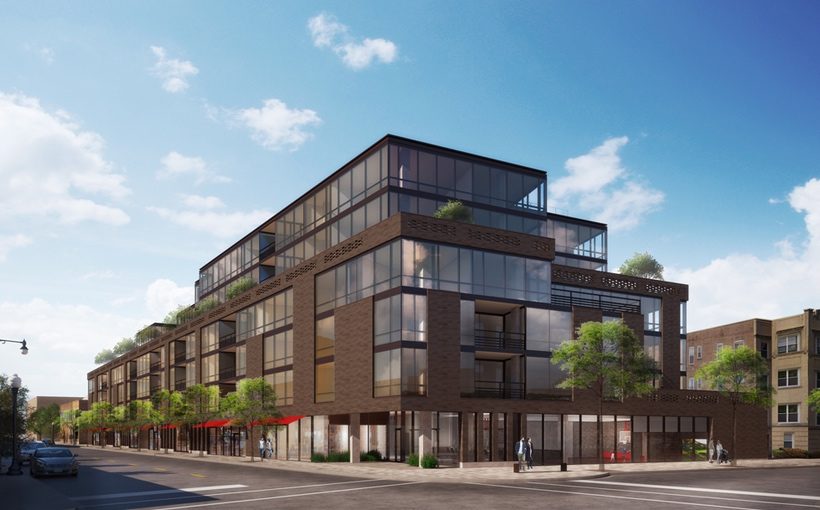
Optima, Inc. today announced its construction team has topped off Optima Lakeview, a new, luxury seven-story 198-unit rental building with 14,000 square feet of street-level retail in Chicago’s Lakeview neighborhood. Optima Lakeview’s first move-ins are scheduled for spring 2022.
Under Optima’s unique vertically integrated model, the firm has served as both designer of the modern low-rise Class A building at 3460 N. Broadway and general contractor. Work on the building, which has earned attention for creating a vibrant and modern community asset on the site of a closed Treasure Island grocery store, began five months ago.
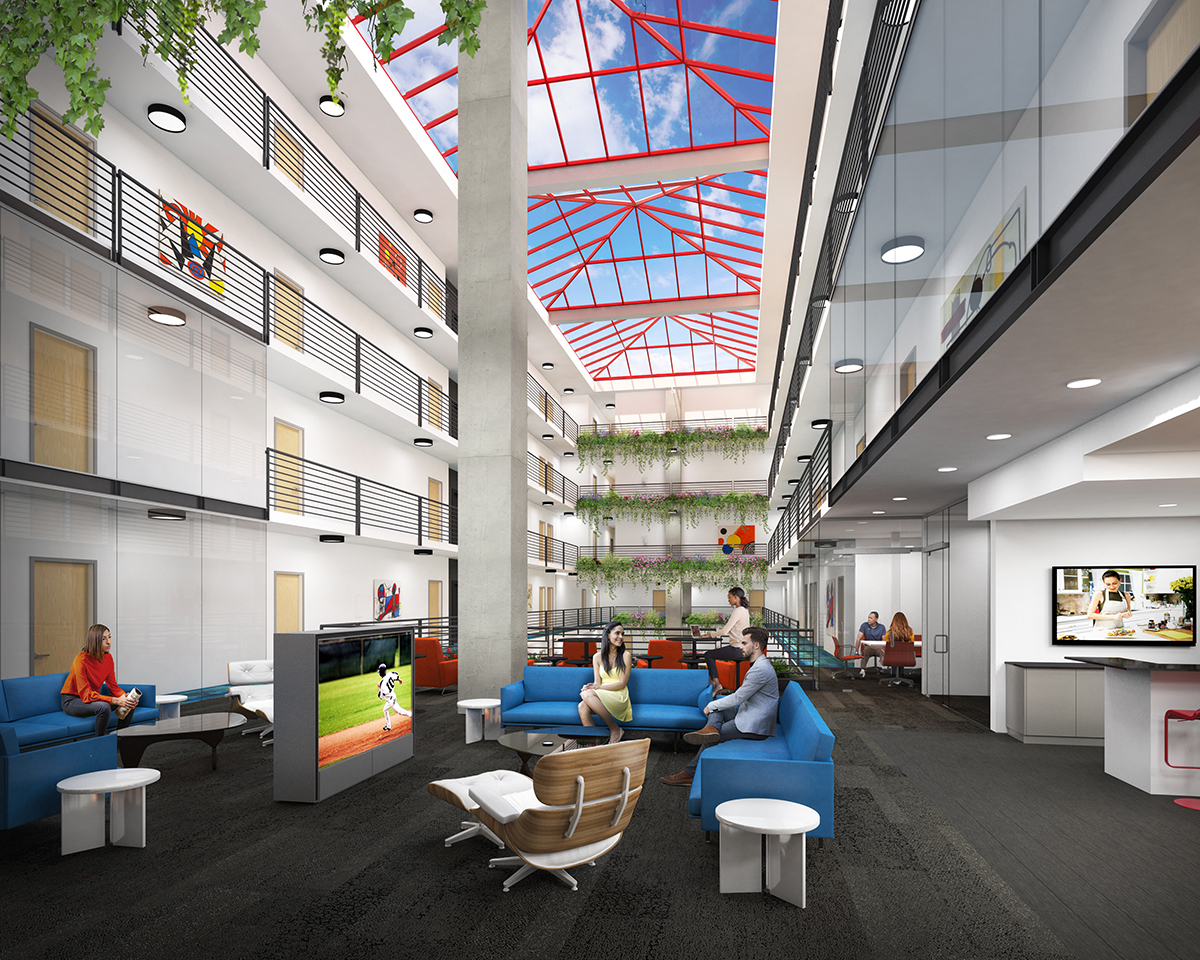
Located within walking distance of Lake Michigan and Wrigley Field, Optima Lakeview will offer its residents access to 40,000 square feet of amenities across the building, including biophilic design elements such as a rooftop sky deck that will be usable year-round and a striking glass-enclosed atrium. Units and amenities will be arranged around the landscaped interior atrium, which will run through the building’s seven-story core and be topped with a skylight to bring in ample natural light.
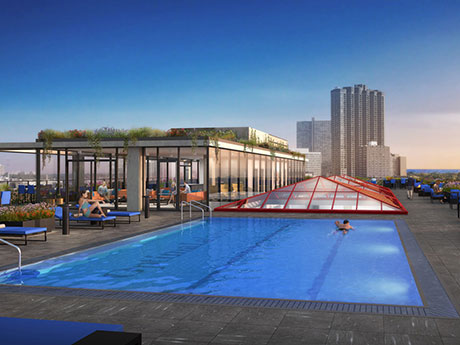
Other building amenities include a rooftop pool, spa, terrace and party room; indoor basketball court; golf simulator and putting green; fitness center with state-of-the-art equipment; yoga/stretching room; sports lounge; dog park and pet spa; children’s play area; game room; demonstration kitchen; two conference rooms; and a business center.
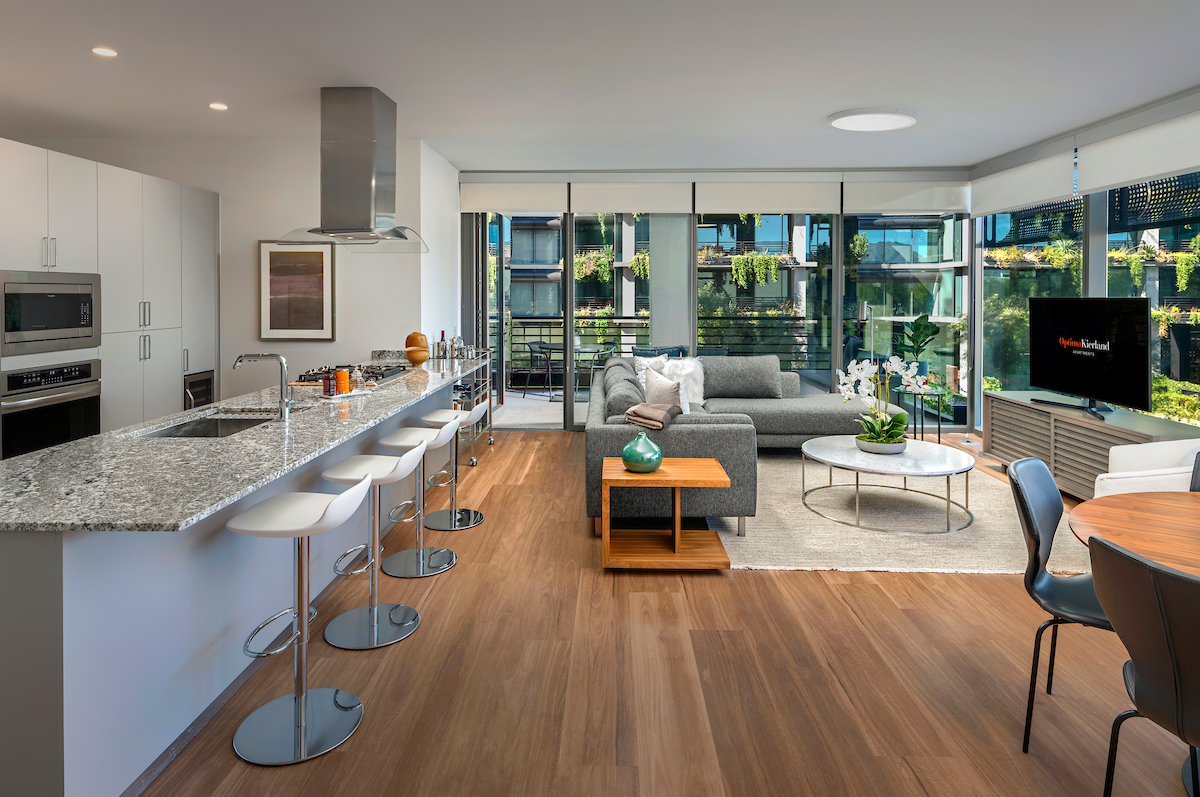
To meet WFH demand, Optima will offer one-, two- and three-bedroom units with an average of 1,053 square feet – significantly larger than what’s currently available in the market – to accommodate dedicated space for a home office. Optima Lakeview also will include two conference spaces and a business center, as well as several indoor and outdoor seating areas and multiple technology providers from which residents can choose.
The impact of COVID-19 on the multifamily sector may not have been as severe as its effect on the retail or office asset classes, but there are still many ways that those professionals active in the multifamily space adapted to pandemic-driven changes. Some of these adjustments, such as virtual apartment tours, are likely permanent.
Here are four pandemic-related trends expected to influence the multifamily sector in 2021, according to a roundup of Midwest-based real estate experts.
Incorporating biophilic design
With the COVID-19 pandemic encouraging Americans to stay outdoors for gatherings in effort to reduce transmission of the virus, there is a greater emphasis on the outdoors and nature. Expect multifamily developers to focus more on bringing the outdoors in via building designs, floor plans and amenities. Large outdoor terraces and rooftop amenity areas are becoming increasingly prevalent in new projects, particularly those in urban environments.
At Optima Lakeview, a Chicago-area multifamily project currently under construction, developer Optima Inc. incorporated a landscaped interior atrium that will run through the building’s core and bring in natural light.
“Green spaces not only improve the air quality for our residents but also those living near our buildings because vertical gardens filter pollutants and carbon dioxide out of the air,” says David Hovey Jr., president of Optima.
Student housing demand will remain
When COVID-19 prompted the shutdown of college campuses across the country, there was concern that student housing beds would sit empty for the 2020-2021 academic year. However, off-campus communities in strong locations not only saw students return, but in some cases, come back in higher numbers.
“2020 was a validation of the model we introduced to the market more than 15 years ago, underscoring how highly amenitized, pedestrian-to-campus housing remains in high demand regardless of how classes are delivered,” says Michael Hales, president of student living for CA Ventures.
CA’s student housing arm delivered more than 3,500 beds in 2020 and expects to deliver upwards of 2,200 for the 2021-2022 school year. Its 2020 leasing numbers were approximately 4 percent ahead of 2019.
Hales predicts that large Tier 1 universities will expand their enrollment bases without having to make significant investments in infrastructure by offering a combination of virtual and in-person coursework, a move that he believes should create additional demand for off-campus housing.
Designers discuss the health-minded elements that are becoming standard in multifamily development.
Low VOC materials and enhanced filtration create wellness-essential indoor air. Credit: Cooper Cary
From students to seniors and affordable to affluent, apartment communities offering wellness features have strong appeal. Features will vary by region and population, so determining which ones make sense for your property will be a customized experience. Here’s what seven industry pros have found in their work.
“At least 70 percent of the newer communities in a market will contain a fitness center,” remarked Kimberly Bynum, multifamily managing principal with Newport Beach-based housing market research firm Zonda. Walkability and pedestrian friendly design, as well as ample, accessible green space and native landscaping are also popular.
Within individual rental units, Bynum pointed to patios and floor-to-ceiling windows for high-rise-buildings. Her firm’s findings suggest healthy/nontoxic/non-off-gassing building materials, hard surface flooring throughout instead of carpeting and improved ventilation appeal to prospective tenants for Class A developers.
Fitness facilities, nature connections and indoor air quality are widely accepted as essential wellness features across all rental categories. How those show up varies by location, user profile and market level.
“Enhanced air filtration and low volatile organic compound materials are the features that we specify on every project,” declared Krista Dumkrieger, principal with the Atlanta-based mixed-use residential studio in Cooper Carry. “Being thoughtful in material specification is one of the most cost effective ways to provide a healthy space for residents.”
Outdoor space is also imperative. “Preferably each unit will have its own dedicated space, even if it’s small. At a minimum, an outdoor area on the property that’s not completely paved,” the architect added. She noted that with so many working from home and spending more time there, this imperative is more important than ever.
Wellness for Students
One of the most-used amenities for student housing properties is the in-building fitness center, declared Jay Pearlman, senior vice president with The Scion Group, a Chicago-headquartered advisory services for student housing communities. “Residents want up-to-date fitness technology such as subscription-based cycling,” he said. “Today’s student residents also have a broader definition of wellness and seek ways to counteract stressors.” His firm is seeing increased demand for yoga and meditation rooms, as well as outdoor space for gathering, fitness and quiet solitude.
Wellness for Seniors
“Many of the must-have wellness features in senior living are those that connect residents with nature,” shared Johnny Dagher, AIA, NCARB, LEED AP, principal at Orlando-based Baker Barrios Architects.
Natural connections extend indoors with biophilia-inspired elements like garden walls, water features and natural lighting, the architect added. “There is a great deal of research showing the connection between natural elements and well-being,” he said. “For example, sitting by a fire is a multi-sensory experience, promoting social interaction and relaxation, but for senior living, particularly assisted living and memory care, we need to be sensitive to safety concerns.” Water vapor fireplaces, which don’t produce heat, is one option to add this feature safely.
Multi-purpose spaces, pet amenities and gardening beds are all affordable, appealing ways to add wellness features with a solid return on investment, Dagher added.
Fireplaces are multi-sensory wellness features, rendered with water vapor for safer senior gatherings. Credit: Baker Barrios / Tuscan Garden
When it comes to the unit itself, high ceilings and larger windows promote well-being, he comments. “Vinyl plank flooring is also a good option for creating a home-like feeling while more low-maintenance compared to traditional wood or carpet,” he said.
Technology integration is a top priority for senior living communities, Dagher noted. Examples include adding spaces dedicated to telemedicine and in-unit smart home technology. He also predicted the appeal of AI technologies to help prevent falls, improve indoor air quality and even offer virtual reality spaces.
It is also essential to understand the needs of future residents, especially in the senior housing space. Tomorrow’s Gen X senior, Dagher pointed out, will be a different tenant than today’s Greatest Generation resident. It’s entirely possible that your mother will spend some of her golden years in the metaverse, as well as in her apartment.
Wellness for Affordable Communities
Affordable projects may lack water walls and connected fitness centers, but their creators, like San Francisco Bay Area-based Community Housing Opportunities Corp., want their properties to enhance the well-being of their lower-income tenants, too. Amenities for the nonprofit community developer’s Palm Springs 60-unit neighborhood include a dog park, splash pad and two BBQ areas.
Another desert region project on CHOC’s planning boards will feature unit terraces with nature views. “Other areas we’re looking at include wider stairways to encourage socialization and ease of use,” shared the project’s architect, Maria Song, AIA, LEED & AP, principal of Interactive Design Corp. “‘Active staircases’ encourage taking the stairs rather than the elevator. This promotes exercise as well. Typically, we include an indoor/outdoor fitness area, or an on-site fitness center if possible. Other areas that developers may explore include creating smaller courtyards which will work for an intimate space for gathering.”
Within the affordable units, cross ventilations through window placement design in addition to air-conditioning and natural lighting serve as wellness features. “We also design accessible kitchens and bathrooms, private balconies on the upper floors and private porches on the first floors to allow outdoor access,” Song said. She predicted more work from home spaces, smart technology for security, more outdoor spaces and on-site wellness amenities like shared kitchens and community centers.
One resource available to affordable communities wanting to be wellness-focused is Fannie Mae’s Healthy Housing Rewards program. Introduced in 2017 for multifamily borrowers who incorporate wellness design features—certified through partners like the Center for Active Design’s Fitwel program—the program provides pricing breaks for new or renovated rental properties.
“We recognized that the success of affordable multifamily properties is directly tied to the health and stability of the residents,” said Karyn Sper, Fannie Mae’s senior director of multifamily customer and partner management. The program is small but growing, “But it’s not for every multifamily owner,” Sper added. “There is a commitment both in terms of meeting the affordability requirement—at least 50 percent of units must be restricted to households earning no more than 80 percent of Area Median Income—and obtaining and maintaining the required certifications.” Sper recommends that those interested in applying should start early.
Wellness for Market Rate Communities
Market rate communities must have club-level fitness facilities. Credit: PMG / Society Living / X Miami Apartments
Fitness, fitness, fitness! All Society Living communities have pool decks, large gyms and a studio for trainer-led classes. There’s also a yoga lawn for outdoor group workouts and wellness-related programming like nutrition.
“Hosting frequent fitness events and keeping a large gym well-operating can be expensive, but it’s a marketing and retention tool that brings major value,” observed Ryan Shear, managing partner at Miami-headquartered developer PMG. The firm is exploring fresh food vending machines, meditation pods and individualized training as opportunities for ancillary revenue.
Gym facilities and programming are the most in-demand amenities, he said, and they must be competitive with private health clubs in the area—not just other communities. The trend is toward more free weights, functional training and group classes and away from plate-loaded machines, he notes.
Within Society Living’s units are enhanced air filtration, large windows and natural light. PMG is “exploring enhanced water purification and air filtration systems in upcoming developments,” Shear commented.
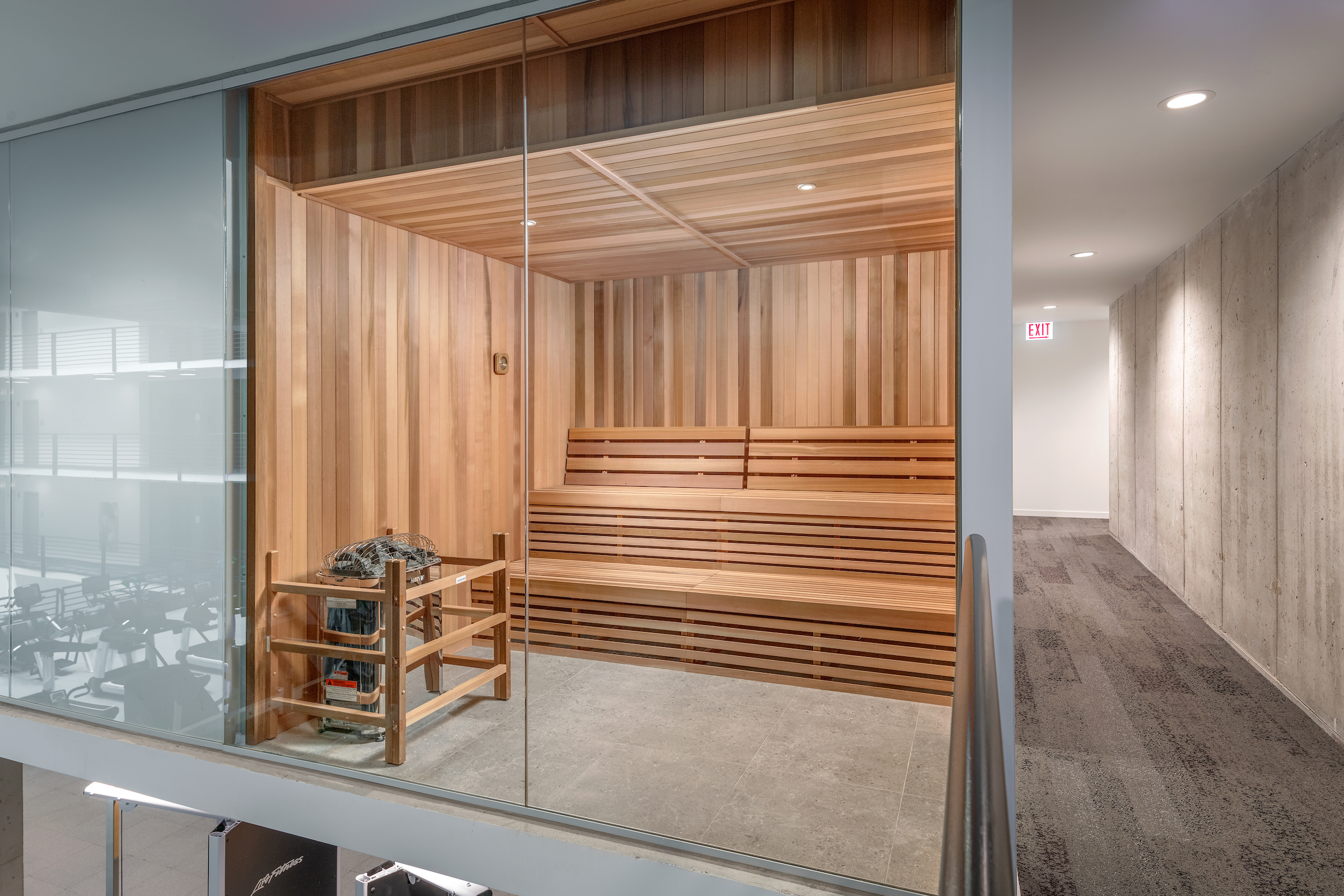
Luxury communities also have pools, yoga studios, fitness centers and classes, as you’d expect. Optima adds saunas and massage rooms (connected to an app for booking services) in their wellness complexes. Given Chicago’s frigid winters, climate control is key.
Premium wellness facilities like saunas are hallmarks of luxury living. Credit: Optima / Optima Lakeview / Michael Duerinckx Photography
“Optima Lakeview boasts the region’s only heated, year-round rooftop swimming pool,” shared David Hovey Jr., AIA, president and principal architect of Illinois and Arizona-based real estate developer Optima, Inc. There’s also a heated dog park. Pickleball and Pilates have been popular, so the developer is looking at expanding those offerings to other communities.
Suburban Chicago Optima Verdana will also have an herb garden and a garden lounge, as well as three outdoor terraces, all designed for year-round use when it opens in 2023. “We believe people will continue to seek usable outdoor space, as we learned during the pandemic the importance of fresh air and being outside,” Hovey shared. This is even true in Chicago winters, he adds.
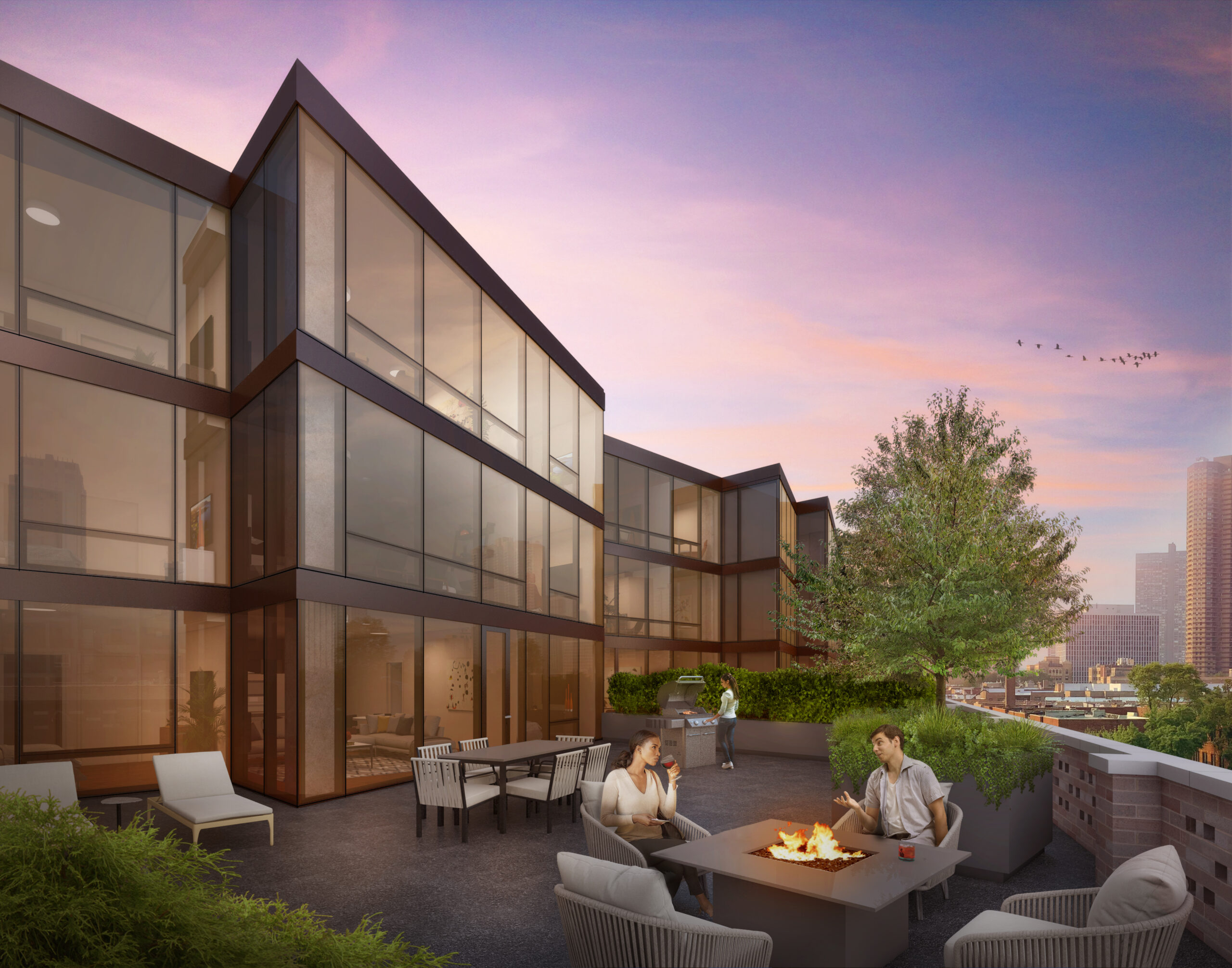
Within Optima’s units, expansive terraces—some with private grills—and floor-to-ceiling windows are extremely popular. “The most searched for wellness design features are the views from our terraces,” Hovey reports.
“Covid really took a growing interest in holistic wellness and supercharged it,” Cooper Carry’s Dumkrieger observeds, noting how the pandemic also brought mental health conversations and the underappreciated benefits of biophilia into the mainstream. Those biophilic offerings include the green spaces and nature views communities across all categories are incorporating. “Preferably each unit will have its own dedicated space, even if it’s small,” she suggested.
Optima, Inc. has started construction on Optima Lakeview, a seven-story, transit-oriented development (TOD) of 198 apartments with street-level retail in Chicago’s Lakeview neighborhood. Located at 3460 N. Broadway, Optima Lakeview will reinvigorate the neighborhood by replacing a shuttered Treasure Island grocery store and parking lot.
“With over 40 years of experience developing in Chicago, we know how exceptional design can enhance a community, so we’re excited to develop the first Optima building in Chicago’s Lakeview neighborhood,” said David C. Hovey Sr., FAIA, CEO of Optima, Inc. “With Optima Lakeview, we’ve incorporated design cues from the surrounding area’s architecture while still staying true to the modern design aesthetic Optima is known for, resulting in a forward-looking building grounded in Chicago sensibility. Both inside and out, Optima Lakeview is very much about drawing people in and helping them stay connected—either with the surrounding community or within the building itself.”
Designed by Hovey, Optima Lakeview will feature an undulating façade with deep recesses, shades and shadows. The building is designed with a series of setbacks that provide for outdoor landscaped terraces on the upper levels of the building. An elegant and sophisticated palette of warm-toned exterior materials, including transparent bronze glass and rich, dark brick, has been selected to complement the surrounding neighborhood. Optima Lakeview also features a distinctive landscaped interior atrium that will run through its seven-story core and is enclosed by a fixed in-place skylight at the roof to bring natural light into the building’s interior. The residential units and building amenities are arranged around the atrium.
“We’re always looking for ways to bring light and connection to nature into our projects as people crave these elements, especially now as many of us are spending more time in our homes,” said Hovey. “With the grand atrium, we’re providing our residents a sun-filled ‘outdoor’ space to enjoy within the building.”
Scheduled for completion in 2022, Optima Lakeview will feature 198 luxury one-, two- and three-bedroom rental units and nearly 14,000 square feet of commercial space fronting Broadway. Residents will have access to 40,000 square feet of extraordinary amenities, including a rooftop sky deck with pool, spa, terrace and party room; indoor basketball court; golf simulator and putting green; fitness center with state-of-the-art equipment; yoga/stretching room; sports lounge; dog park and pet spa; children’s play area; game room; demonstration kitchen; two conference rooms and a business center. As a TOD, the building will offer 94 fully enclosed parking spaces at grade level and storage for 208 bicycles.
Optima paid special attention to work-from-home needs, designing floor plans with an average of 1,053 square feet, significantly larger than what’s currently available in the market, to accommodate dedicated space for a home office. In addition, Optima Lakeview features two conference spaces and a business center, as well as several indoor and outdoor seating areas and multiple technology providers from which residents can choose.
Located steps from Lake Michigan and some of the most popular restaurants, bars, theatres and shopping in Lakeview, Optima Lakeview is also within a short walk of Wrigley Field, the scenic Sydney R. Marovitz Golf Course, Waveland tennis courts and softball fields, Belmont Harbor and the Lakefront Trail, which offers miles of jogging and biking along Lake Michigan.
Optima officials say their construction team topped off Optima Lakeview, a new seven-story, 198-unit rental building with 14K SF of street-level retail at 3460 Northway Broadway St. in Chicago’s Lakeview neighborhood. Optima Lakeview’s first move-ins are scheduled for spring 2022. The firm served as both designer and general contractor. Work on the building, a former Treasure Island grocery store, began five months ago.
In today’s apartment marketplace, where rents and occupancy are at historically high levels, quality customer service is proving to be the differentiator.
Of the many consequences of contending with the pandemic, one of the most visible has been a groundswell in expressions of frustration. From air travel to dining to work and school, the list of grievances runs long, and rental housing residents are no different, from the perception that maintenance takes too long to coffee machines running dry.
One of the biggest complaints has been the difficulty of working from a small apartment, according to buzz at the National Multifamily Housing Council’s (NMHC) 2022 annual meeting, says attendee Mary Cook, founder of Chicago-based Mary Cook Associates (MCA), a commercial interior design firm. “Two years ago, 20 percent might have worked from home and now 45 percent do a few days each week,” Cook says. “They get upset if staff is making noise blowing leaves or cutting a lawn.”
Property managers have complaints and frustrations, too, facing a shrunken labor pool and disrupted supply chains. Despite the apartment industry experiencing historically strong occupancy levels, managers are not taking the high numbers for granted. If COVID-19 has brought home any message, it’s that situations change—fast.
Many are listening closely to residents, taking notes about leading causes of dismay and sources of joy, developing creative solutions to increase net referrals. The strategies that seem to make the biggest difference are good customer service and value. Some companies, like Chicago-based Optima Inc., a developer and property manager that created 2,135 units in Illinois and Arizona, has trademarked its Optimized Service, the equivalent of an in-home concierge, to make clear it prioritizes service.
As rent prices climb, quality service becomes more critical. The following are 10 ways to achieve it.
Design-driven real estate development firm Optima opened its 198-unit Optima Lakeview project in Chicago’s Lakeview neighborhood last June. The apartment building offers one-, two-, and three-bedroom floor plans with a unit average of 1,053 square feet and was curated to meet the needs of many types of renters, ranging from young professionals to couples, families, empty nesters, and retirees.
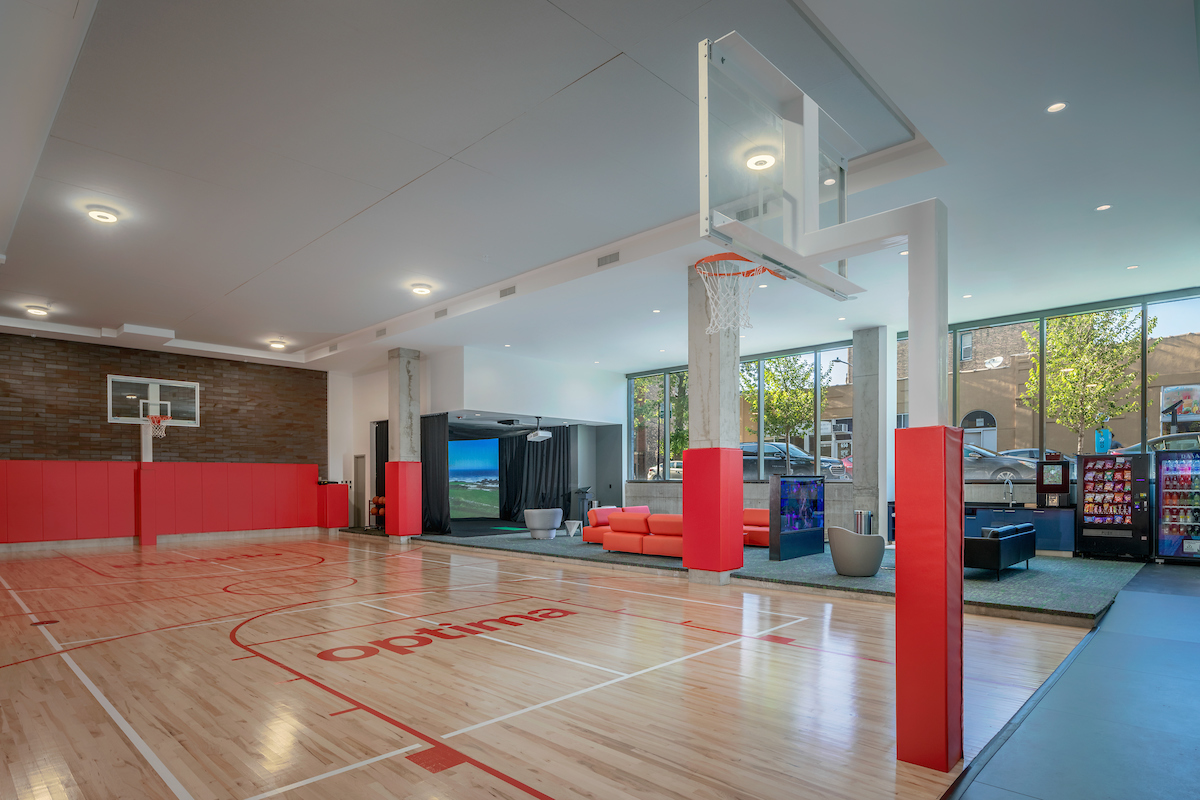
When Optima CEO and founder David Hovey Sr. designed the project, he knew he wanted to include an indoor sports court. Instead of placing it in a windowless corner of the building, Hovey sited the sunken sports court along an exterior wall and flanked it with street-level windows, allowing for natural light and views of the bustling neighborhood.
Michael Duerinckx Photography
The result is a recreational area that provides an enjoyable atmosphere for participants to perfect their swing via a golf simulator, shoot hoops on the basketball court, or learn one of the nation’s hottest sports, pickleball, which has been so well-received that building residents formed a pickleball league.
An added bonus is that the court is also within sightlines of the building’s main entrance and lobby, so residents can easily watch the fun throughout the day.
Optima, Inc. has begun construction on Optima Lakeview, a seven-story transit-oriented development in the North Side’s Lakeview neighborhood. Located at 3460 N. Broadway, Optima Lakeview will replace a shuttered Treasure Island grocery store and parking lot.
“With over 40 years of experience developing in Chicago, we know how exceptional design can enhance a community, so we’re excited to develop the first Optima building in Chicago’s Lakeview neighborhood,” said David C. Hovey Sr., CEO of Optima. “With Optima Lakeview, we’ve incorporated design cues from the surrounding area’s architecture while still staying true to the modern design aesthetic Optima is known for.”
Scheduled for completion in 2022, Optima Lakeview will feature 198 luxury one-, two- and three-bedroom rental units and nearly 14,000 square feet of commercial space fronting Broadway. Residents will have access to 40,000 square feet of amenities throughout the building.
CHICAGO, IL – Optima, Inc. today announced its construction team has topped off Optima Lakeview, a new, luxury seven-story 198-unit rental building with 14,000 square feet of street-level retail in Chicago’s Lakeview neighborhood. Optima Lakeview’s first move-ins are scheduled for spring 2022.
Under Optima’s unique vertically integrated model, the firm has served as both designer of the modern low-rise Class A building at 3460 N. Broadway and general contractor. Work on the building, which has earned attention for creating a vibrant and modern community asset on the site of a closed Treasure Island grocery store, began five months ago.
“Optima Lakeview is the culmination of the vision our firm had four decades ago to design and build communities from blueprint to move-ins,” said David Hovey Jr., AIA, president and COO of Optima, Inc. “I’m especially proud to celebrate this construction milestone with our in-house team, who navigated a pandemic on a job site, not to mention extreme temperatures and the heavy snowfall that gripped the region, to keep work on track for a building that we hope will debut to strong demand in a post-COVID-19 world when it opens next spring.”
Located within walking distance of Lake Michigan and Wrigley Field, Optima Lakeview will offer its residents access to 40,000 square feet of amenities across the building, including biophilic design elements such as a rooftop sky deck that will be usable year-round and a striking glass-enclosed atrium. Units and amenities will be arranged around the landscaped interior atrium, which will run through the building’s seven-story core and be topped with a skylight to bring in ample natural light.
Other building amenities include a rooftop pool, spa, terrace and party room; indoor basketball court; golf simulator and putting green; fitness center with state-of-the-art equipment; yoga/stretching room; sports lounge; dog park and pet spa; children’s play area; game room; demonstration kitchen; two conference rooms; and a business center.
Convenience will be another top amenity at Optima Lakeview. In-unit modern smart home technology, including keyless unit entry and smart thermostats and lights, will help residents save time. Another perk will be access to Optima’s specialized Optimized Service® program, which provides contact-free in-home package delivery, housekeeping services, on-site room service, fitness programming and a virtual personal assistant, among many of things, as well as Optima Connect®, which customizes exclusive benefits and discounts for residents to patronize local businesses.
To meet WFH demand, Optima will offer one-, two- and three-bedroom units with an average of 1,053 square feet – significantly larger than what’s currently available in the market – to accommodate dedicated space for a home office. Optima Lakeview also will include two conference spaces and a business center, as well as several indoor and outdoor seating areas and multiple technology providers from which residents can choose.
Designed by Optima CEO David Hovey Sr., FAIA, Optima Lakeview features a series of setbacks that provide for outdoor landscaped terraces on the upper levels of the building that will feature built-in grills and fire pits. Hovey selected an elegant and sophisticated palette of warm-toned exterior materials, including transparent bronze glass and rich, dark brick to complement the surrounding neighborhood.
Earning transit-oriented development (TOD) status, Optima Lakeview has an array of transportation options. Residents can catch the #36 CTA Broadway bus just steps from the building, or walk to the CTA Addison red line, or CTA Belmont Red Line station or the Belmont/Marine Drive bus stop, which offers multiple local and express bus routes to downtown Chicago. They may also use one of the building’s 208 enclosed bicycles spaces. In addition, the building features 94 fully enclosed parking spaces at grade level.
Optima Lakeview is within a short walk of Lake Michigan and some of the most popular restaurants, bars, theatres and shopping in Lakeview; Wrigley Field; the scenic Sydney R. Marovitz Golf Course; Waveland tennis courts and softball fields; Belmont Harbor; and the Lakefront Trail, which offers miles of jogging and biking along Lake Michigan.
Since Optima’s founding, we have thoughtfully developed environments where nature and architecture coexist. Optima Lakeview and Optima Verdana are great representations of how we create this harmony in a multi-seasonal environment. Optima Lakeview recently had its grand opening and is now taking in-person tours of four floors of amenities, including the sky deck, and three new model residences. Optima Verdana is scheduled for completion in spring of 2023.