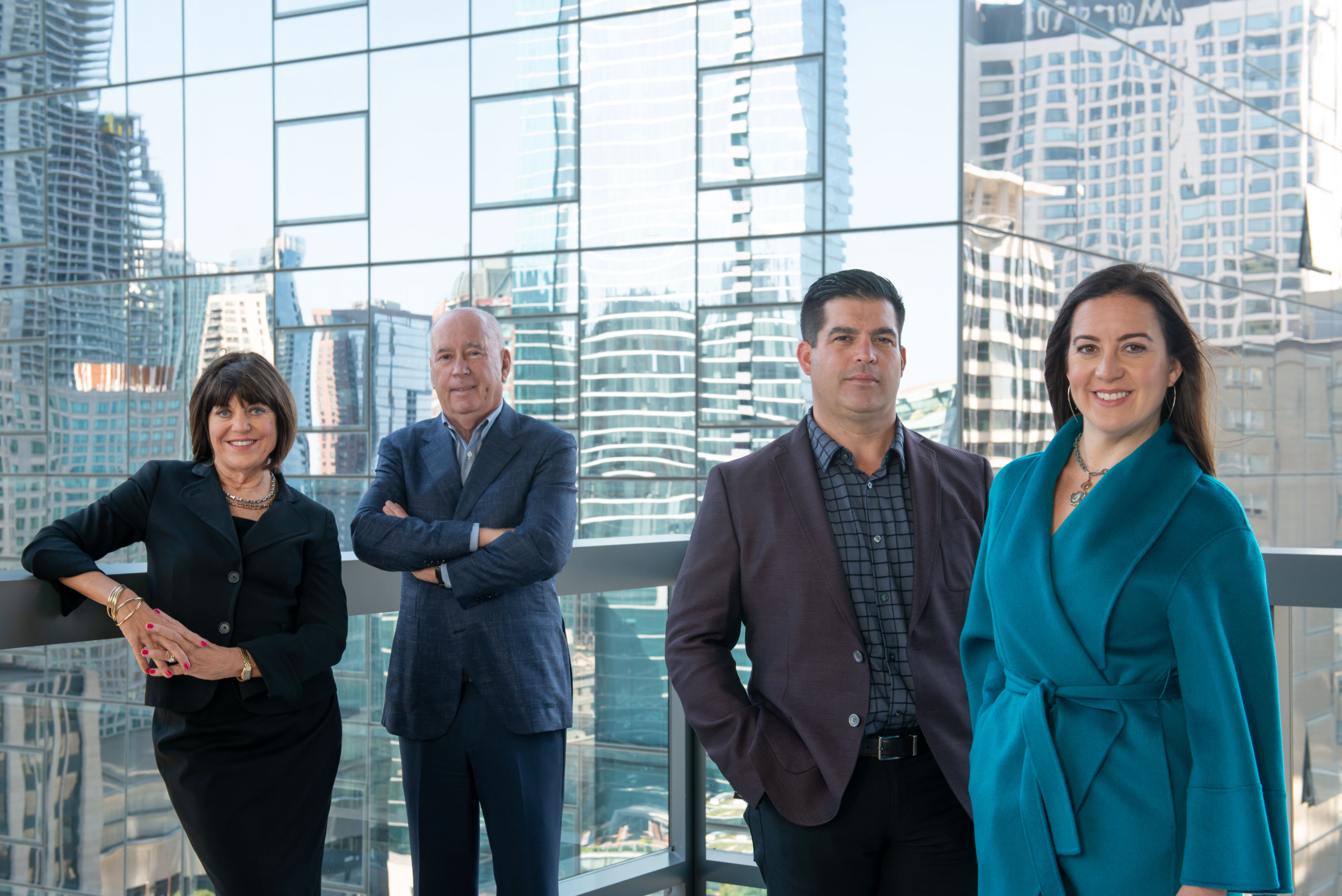
Every building tells a story about the people who designed it, their values, their obsessions, their vision for what a place could be. At Optima, that story begins in 1978, with a conviction that architecture should lead, and that the only way to hold that vision without compromise was to own the entire process from the beginning.
A Vision Born at IIT
David Hovey Sr., FAIA grew up architecturally at the Illinois Institute of Technology, studying under a program built by Ludwig Mies van der Rohe, one of the great modernist masters, and later returning for his Master’s degree under the mentorship of Arthur Takeuchi. It was Takeuchi who planted the seed: that the best outcome for an architect was to be not only the designer, but also the developer and the client. That idea became the foundation of everything Optima has built since.
Frustrated by the red tape of the traditional model, where owner, architect, and developer operate as separate entities, often in tension, Hovey Sr. and his wife Eileen founded Optima as a vertically integrated firm that controlled the entire process in-house. Design was not a service rendered to a client. It was the driving force. From the first small projects in Hyde Park, the goal was always the same: start with design, learn with each project, and never compromise the vision.
The DNA of Every Community
What emerged from that founding belief is an architectural language that is unmistakably Optima, and that has remained consistent across more than four decades and two generations of design leadership. Clean geometry. Natural integration. High-performance materials. The deliberate blurring of inside and outside. Light treated not as a utility but as a design element.
That language is visible in the living facades of Optima Sonoran Village, where a vertical landscaping system with self-containing irrigation allows a varied palette of plants to grow at the edge of every floor, turning the building itself into something that grows and changes with the seasons. It’s visible in the seven-story skylit atrium at Optima Lakeview, where David Hovey Sr. described his intention simply: to provide residents a sun-filled outdoor space to enjoy within the building. It’s visible in the rooftop running tracks and Olympic-length pools at Optima Kierland and Optima McDowell Mountain, amenities that exist because the architects who designed the buildings also designed the life that happens inside them.
The Arizona Chapter
The expansion into Arizona beginning in 2000 wasn’t just a market decision, it was a design opportunity. David Hovey Jr., who studied architecture at his father’s alma mater and has served as President of Optima, describes the desert as a laboratory: a place to test modernist principles against an extreme climate, to learn how concrete, steel, high-performance glazing, shading devices, and native desert landscaping perform when pushed by heat and light. The influence of Frank Lloyd Wright’s Taliesin West, and the principle that architecture must be understood in relation to its specific landscape, runs through every Arizona community Optima has built.
The result is a portfolio of desert buildings that work with their environment rather than against it. Buildings that manage heat, embrace light, bring greenery into architecture, and create outdoor spaces that extend the experience of home into the landscape beyond.
A Living Legacy
The Optima design legacy is also a living one. David Hovey Jr. has deepened the firm’s commitment to sustainability, designing Optima McDowell Mountain to be the first development in Arizona built under both the new International Energy Conservation Code and International Green Construction Code, with the largest private rainwater harvesting system in the country. Tara Hovey has ensured the firm’s financial integrity and long-term relationships remain as strong as its architectural vision. The next chapter of Optima communities continues to push the limits of imagination, in architecture, construction, sustainability, and the fundamental question that has driven the firm since 1978: how can design genuinely improve how people live?
The Legacy You Live In
You don’t need to know architectural history to feel the Optima difference when you walk into one of our communities. You feel it in the light, in the proportions, in the materials that improve with time rather than date. You feel it in the sense, hard to name but impossible to miss, that the place you’ve come home to was designed by people who cared deeply, over decades, about getting it right. That is the Optima design legacy. And it lives in every room.
Experience a design legacy in person. Schedule a tour at an Optima community today.
