A Day at the Art Institute

Architecture is intrinsically linked to art; and designing within the Modernist discipline, we find inspiration from all forms of art. That’s why there’s no better place we can think to spend the day than at the Art Institute of Chicago

The Art Institute is one of the oldest and largest art museums in the United States. Founded in 1879, the museum is an iconic fixture in downtown Chicago’s Grant Park on Michigan Avenue. As a host to 1.5 million people annually, the curatorial efforts there always brings forth something new to see and learn. 

This year, to celebrate 100 Years of Bauhaus, new special exhibitions at the museum shed light on the lasting influence of the iconic design school. That impact has extended into our practice at Optima, with the history of icons like Walter Gropius, Ludwig Mies van der Rohe and other Modernist masters informing how we create today. Visiting the Art Institute gives us the opportunity to see how that impact has spread elsewhere, too, in three phenomenally curated exhibits. If you only have one day to spend at the museum, this is what we recommend seeing:

In a Cloud, in a Wall, in a Chair: Six Modernists in Mexico at Midcentury

For the first time ever, the Art Institute is showing the work of Clara Porset, Lola Álvarez Bravo, Anni Albers, Ruth Asawa, Cynthia Sargent and Sheila Hicks as a group. The exhibition explores the unifying factor that has impacted the work of each of these artists and designers: Mexico. From different generations and mediums, all created work that was boundary-breaking.

In a Cloud, in a Wall, in a Chair: Six Modernists in Mexico at Midcentury is open until January 12, 2020.

Weaving beyond the Bauhaus

Tucked away on the lower level of the museum, this modest exhibit serves an impactful punch. The exhibit traces the diffusion of Bauhaus weaving workshop artists Anni Albers and Marli Ehrman, and their reciprocal relationships with fellow artists and students. The result is a soaring collection of weavings, acting as a conversation between iconic female textile artists.

Weaving beyond the Bauhaus is open until February 17, 2020.

Bauhaus Chicago: Design in the City

When the Bauhaus shut down, its teachers, students and thought disseminated across the world. This exhibition explores the way that instructors and students at ID and IIT adapted the German design philosophy to the United States through an array of medium, spanning from  jewelry, photography, and textiles to furniture, monumental sculpture and urban planning. 

Bauhaus Chicago: Design in the City is open until April 26, 2020.We love the way that art helps us understand the world, and in turn, informs the work we do every day. This collection of exhibits plays off one another beautifully to help deepen that understanding, relating it back to our practice in a context that is at once close and timelessly global. To experience these exhibits and everything the Art Institute has to offer, visit their website.

Forms in Bronze: The Work of Henry Moore

As one of the most influential British artists of the 20th century, Henry Moore often used his sculptural work to explore landscape and the human form. With our design deeply rooted in a respect for nature, Moore’s art is an innate fit to our beliefs and passions at Optima.

To honor this connection, we look back on his life and its work.

The Life of Henry Moore

Henry Moore was born July 30, 1898 in Castleford, Yorkshire, lucky number seven to a household of eight children. Moore’s father was a miner, looking to help his children escape poverty by seeking advanced education — he believed that pursuing art and sculpture was just another form of manual labor with few career prospects. And while Moore displayed an affinity for and interest in the arts at school, he was nonetheless pushed in the direction of a teaching career. 

On his eighteenth birthday, Moore enlisted in the British Army during World War I. A gas attack injury forced his honorable discharge, and led to an ex-serviceman’s grant that allowed him to pursue an education in the arts. In 1919 he became a student at Leeds College of Art and in 1921 continued his education at the Royal College of Art in London. 

Ironically, Moore did end up teaching at the college, and it was there that he met his wife. Eventually, the two moved to a farmhouse in Perry Green, Hertfordshire, where Moore was able to further explore landscape, nature and the female form in his sculpture.

Two Forms by Henry Moore. Credit: M. Readey on Wikimedia Commons, licensed under the Creative Commons Attribution-Share Alike 3.0 Unported license.

The Art of Henry Moore

Moore was a driving force in the English Surrealist movement, although he was also inspired by the primitive forms that he saw as a schoolboy at the British Museum, citing Mexican, Egyptian and African sculptural influences. 

His work was also undeniably influenced by nature, landscape and the female form — the softly undulating curves found within his sculptures are reminiscent of the lulling hillside of his birthplace, Castlefor, and his sculptures are always abstractions of the human figure that typically depict mother-and-child relationships or reclining bodies.

One of Moore’s most famous works, Recumbent Figure 1938, was commissioned for the terrace of a modernist house in the Sussex countryside. Moore said of the sculpture, “My figure… became a mediator between modern house and ageless land.” His wood and bronze sculptures set apart by their curves, hollows and piercings, evoking the feeling of objects that were both ancient and modern all at once in their influence and form. 

Because of his connection to nature and to Modern abstraction, Moore is indeed a beautiful mediator between natural and built environments, something we too strive to achieve through our projects.

Neighborhood Spotlights: Our Favorite Streeterville Spots

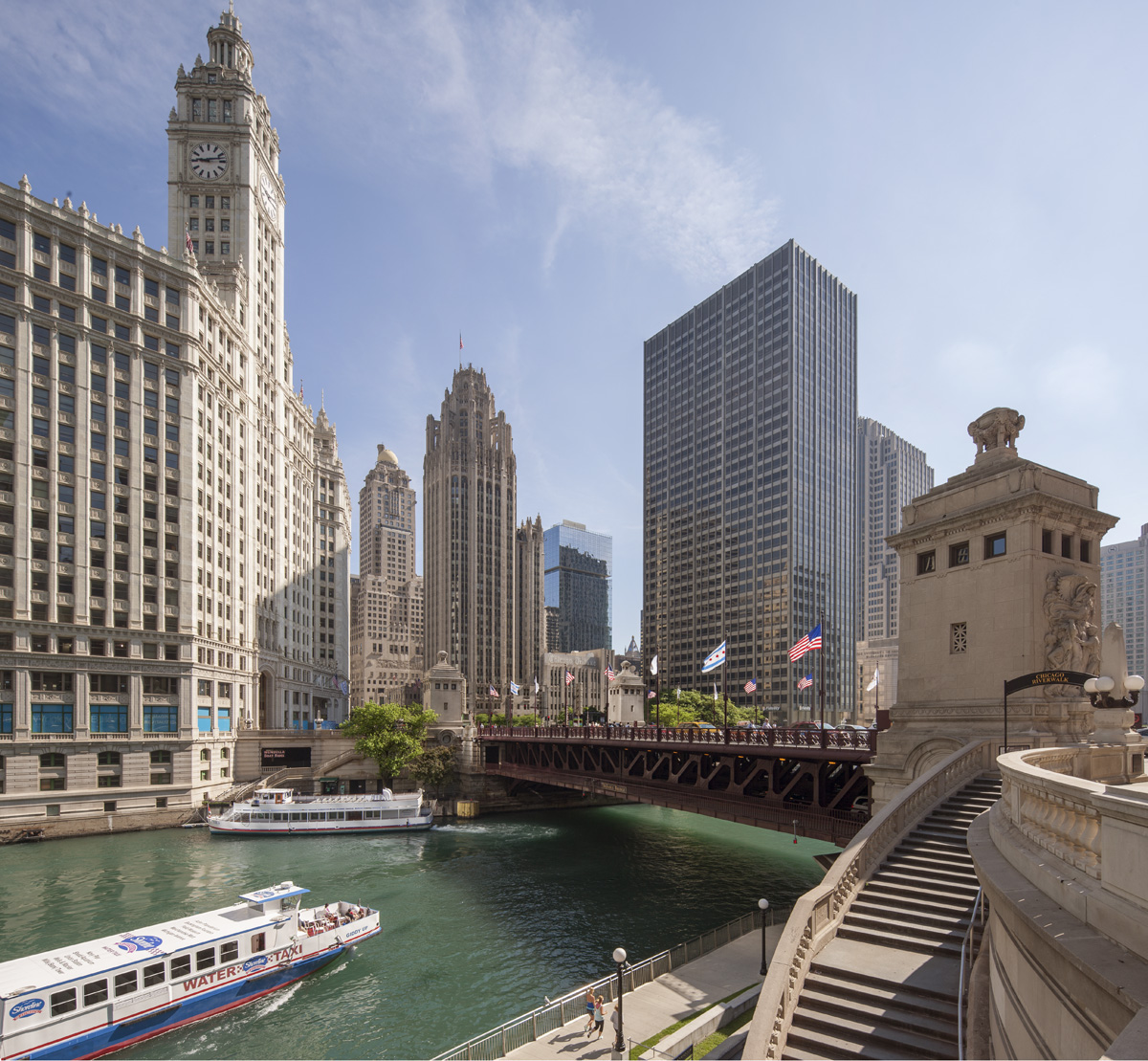
Home to Optima Signature and Optima Chicago Center, Streeterville is one of Chicago’s many thriving neighborhoods. Nestled just north of the Loop in downtown, the Streeterville area intersects the art, culture, food and event scenes of the Windy City. Here are just a few of our favorite spots:

The Chicago Riverwalk

Whether you’re looking for a fun Friday night out or to learn more about Chicago’s history, the Riverwalk is your destination for a good time. Spend an evening at City Winery’s riverside location, hop on an architectural boat tour or go for a quick jog around downtown Chicago. Although best experienced in the city’s warmer months, the Chicago Riverwalk is a fantastic spot for Optima residents, visitors and locals alike. 

The Restaurant Scene

Like the rest of Chicago, Streeterville boasts plenty of amazing restaurants and drinkeries. For a night of fantastic food, The Purple Pig’s tapas, the pasta at Volare Ristorante, or a lobster roll at the Hampton Social are just around the corner. From Sunday brunch to Friday evening date night, Streeterville’s culinary scene doesn’t disappoint. 

Streeterville, with Optima Signature in the skyline

The Culture

Within Chicago’s vast cultural ecosystem, Streeterville claims a handful of spectacular museums and organizations. The Museum of Contemporary Art, located up Michigan Avenue, is one of the world’s largest contemporary art venues, established in 1967. One of Chicago’s most iconic destinations, Navy Pier is home to the Children’s Museum, the Chicago Shakespeare Theater and events throughout the year, including EXPO Chicago. 

We’re proud to have strong roots in Chicago, and excited to be a contributing part of the Streeterville neighborhood; Stay tuned for more neighborhood spotlights on our other Optima communities.

Optima Sculpture Spotlight: Duo

The design of interior space doesn’t end with architecture. A key component to creating engaging environments at Optima is the inclusion of art — particularly sculpture. Optima co-founder David Hovey Sr., FAIA explores new ways of expressing space, form and function through his monumental, three-dimensional sculptures in brilliantly-hued steel, including Duo, ultimately adding a new vibrancy to our carefully curated communities.


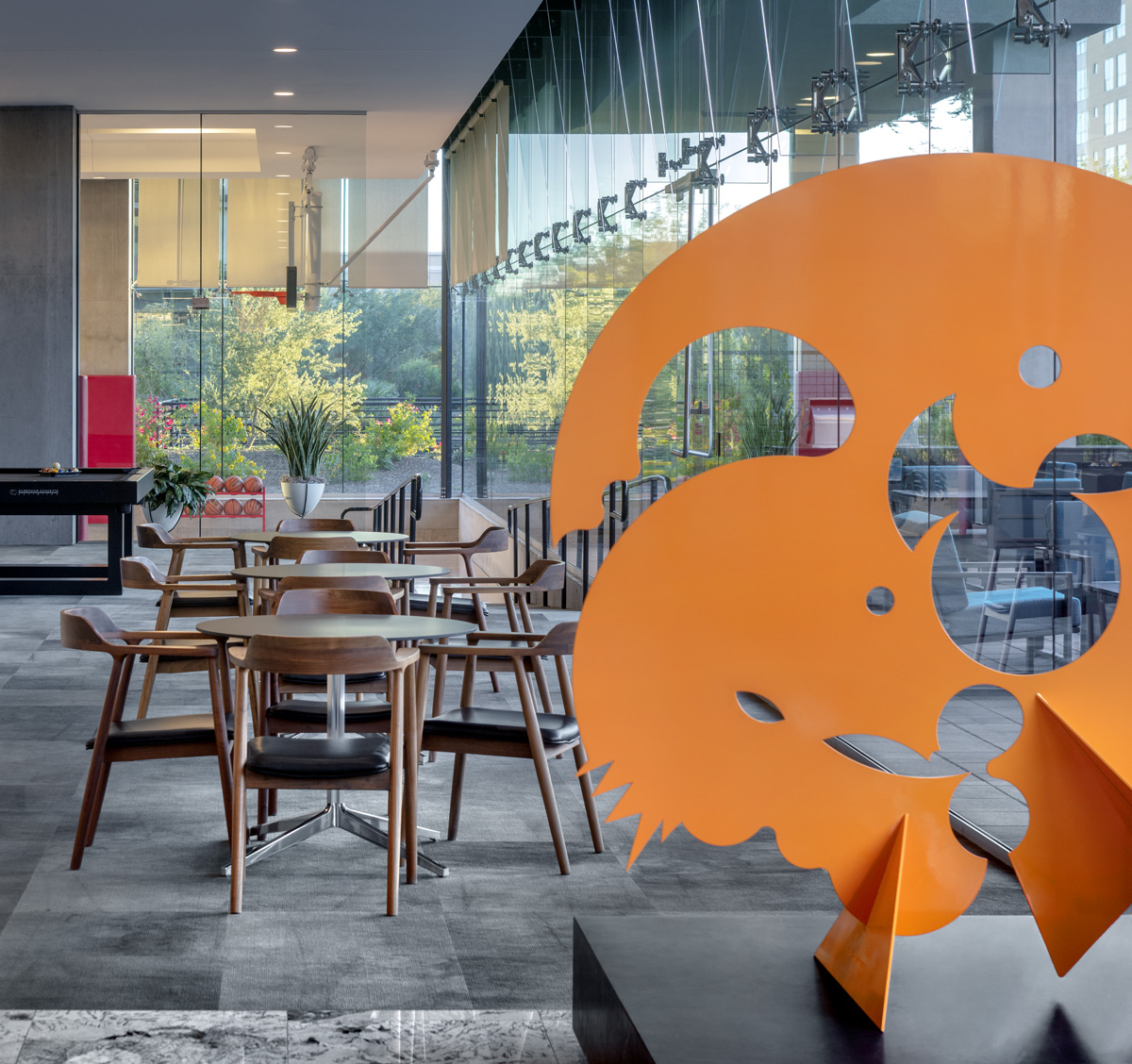
Duo at the 7160 Optima Kierland Residence Club, Scottsdale, AZ

Originally created as a large-scale piece, Duo is a striking and abstract silhouette that evokes the image of a man and woman gazing into one another’s eyes. Hovey states that often, he doesn’t approach a piece of steel with the intention of drawing out specific imagery. Rather, he imagines how to explore form and function through the size, shape, voids and shadows, lights and sounds that emanate from the manipulation of the material. With Duo, Hovey sought to craft a study of duality and opposites through curved lines, fierce angles, symmetry and asymmetry. The human-like quality that resulted is part of the intriguing and surprising discovery from the sculpture’s true expression.

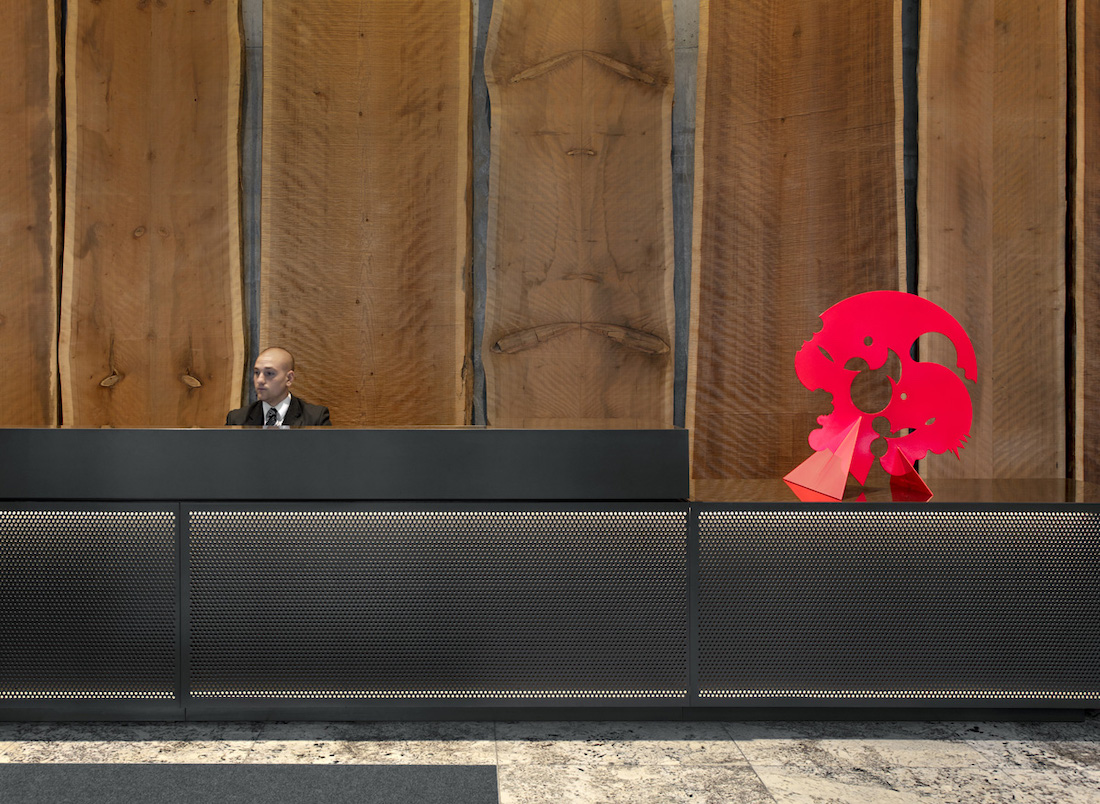
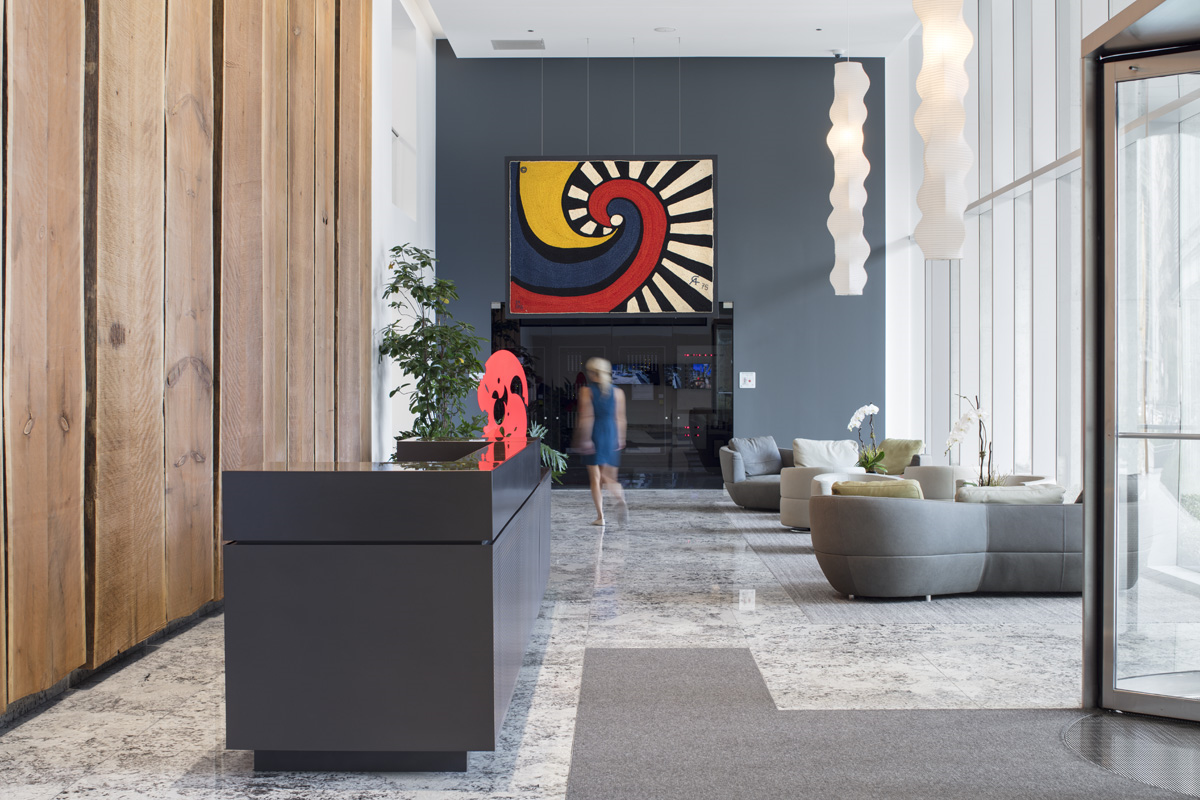
Duo now takes many sizes and colors, with one iteration adorning the front desk at Optima Signature in a brilliant pop of red. Not only does the inclusion of sculpture add a new dimension to the spaces that we design, but it allows a new avenue for exploration, discovery and expression.

The Playful Work of Alexander Calder

It’s no secret that we love color at Optima, and we carefully curate our interior furniture, textures and designs to reflect the vibrancy of our spaces. Our curated artwork is no exception, and throughout the halls of projects such as Optima Signature, Alexander Calder’s bright works greet residents with bold tones and distinct shape. A multimedia artist whose influence spans across decades, Calder’s work creates a meaningful connection to a rich piece of art history.

Calder’s Past

Born in Pennsylvania in 1898, Calder came from a family of artists; his grandfather and father both had rich careers as sculptors and his mother was a professional portrait artist. Though his family had artistic roots, they supposedly did not want him to follow in their footsteps. Calder began studying mechanical engineering in New Jersey, bouncing between jobs all while still being inspired by create. By the 1920s, Calder had moved back to New York to pursue a career as an artist. 

Calder’s Artistic Career

After studying in New York, Calder moved to Paris where he studied, established a studio and met his future wife. While living in Paris, Calder joined the ever-growing network of avant-garde artists, including Fernand Léger, Jean Arp and Marcel Duchamp. Throughout his life, Calder maintained a strong connection to France, naming many of his works in French regardless of their location. After a lifetime of impactful creativity and exploration, Calder died unexpectedly of a heart attack in 1976, leaving behind an expansive and far-reaching legacy. 

Calder’s Legacy

Over his career, Calder produced a wide range of work, spanning from sculpture, to stage sets, paintings, prints and jewelry. Like previous generations of Calders, he was also a recognized large-scale sculptor. Flamingo, one of his more notable works in Chicago, adorns the Federal Plaza with beautiful form and the famous “Calder Red” color. We’re thrilled and honored to have the works of Alexander Calder throughout our buildings, and hope they bring a bright source of inspiration to those who view and enjoy them. 


person name goes here

Maintenance Supervisor

Glencoe, IL


    Acceptable file types: *.pdf | *.txt | *.doc, max-size: 2Mb