Desert-Smart Fall Planting: Low-water Perennials and Container Ideas that Thrive Through Winter

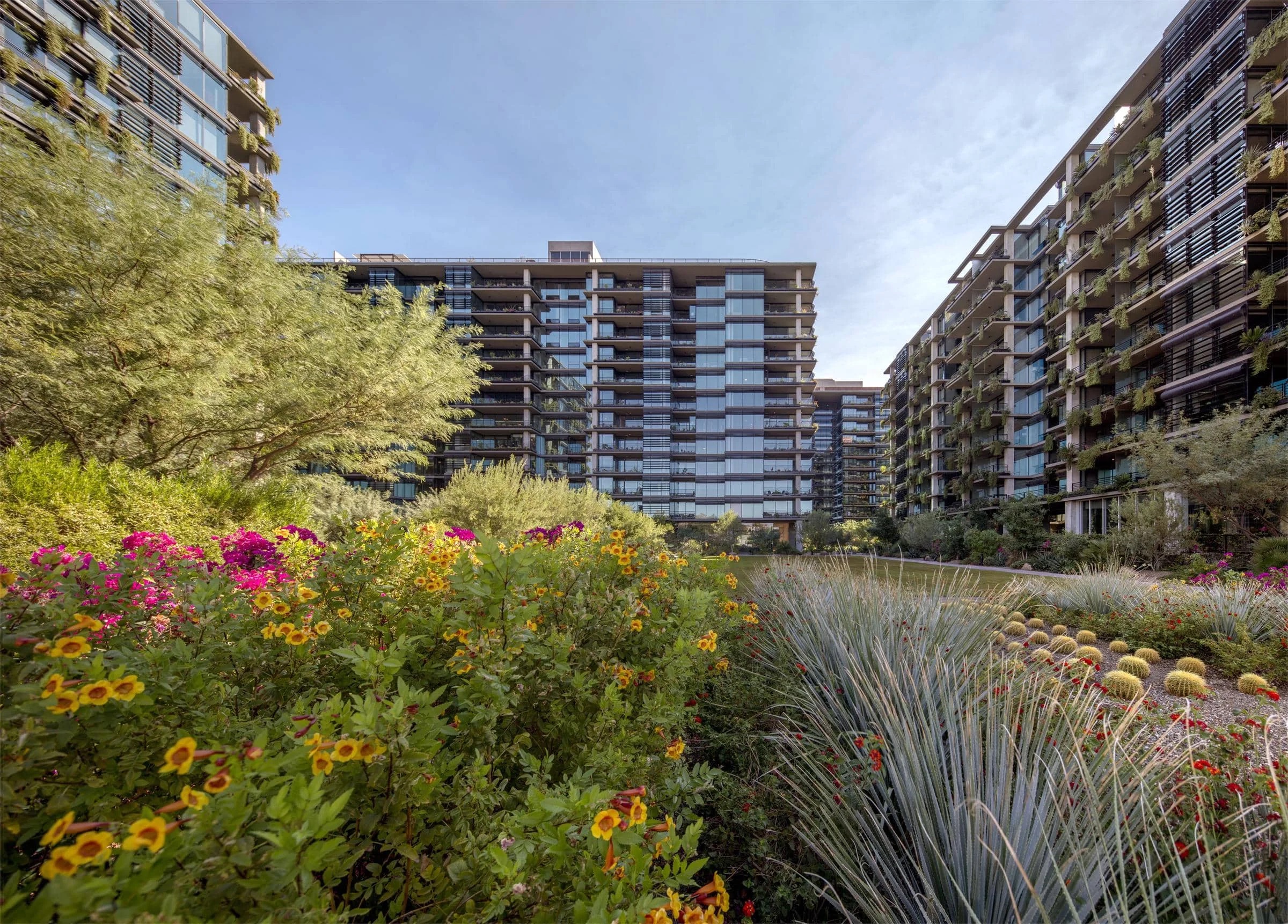
When Scottsdale’s mornings turn crisp and the light softens, fall becomes planting season—a chance for Optima Sonoran Village®, Optima Kierland Apartments®, and Optima McDowell Mountain® residents to refresh outdoor spaces with containers that look effortless now and carry color, texture, and bloom well into winter. With the Sonoran Desert as your muse, the goal is simple: plant smart, water less, and design for year-round enjoyment.

Why Fall is the Moment
Cooler nights and mild days help roots establish before the brief winter chill, so plants settle in with less stress and less water. And as autumn continues, you’ll also benefit from gentler sun angles and calmer afternoon heat, which means new plantings transition quickly.

Choose the Right Cast
When planning for your planting, think in three roles—structure, spark, and spill—to build sculptural, modern containers that offer clean lines.

  • Structure (architectural forms): dwarf agaves (Agave ‘Blue Glow’), red yucca (Hesperaloe parviflora), aloe hybrids (winter bloomers), golden barrel cactus (Echinocactus grusonii), deer grass (Muhlenbergia rigens).
  • Spark (seasonal color + pollinator value): autumn sage (Salvia greggii), Parry’s penstemon (Penstemon parryi), angelita daisy (Tetraneuris acaulis), blackfoot daisy (Melampodium leucanthum), damianita (Chrysactinia mexicana), Spanish lavender (‘Goodwin Creek’).
  • Spill (edge-softening): trailing rosemary, blue chalk sticks (Senecio serpens), trailing lantana (use sparingly—can frost-nip but rebounds), ice plant (Delosperma).

Golden barrel cactus. Credit: Public Domain Pictures.

Herbs that Love Our Winter
Fall is prime time for a small culinary pot—rosemary, thyme, oregano, and sage stay fragrant through winter, need little water, and elevate weeknight cooking. Tuck a chiltepin pepper into a sunny corner if you like a quick hit of heat; it’s compact and handsome in containers.

Design like a Desert Modernist
Choose a tight palette—charcoal, terracotta, or weathered steel—to echo Optima’s materiality. Cluster containers in odd numbers, mixing heights for rhythm without clutter. A 1–2″ topdress of decomposed granite or black lava rock sharpens the silhouette, moderates soil temperature, and reduces evaporation.

Container (and Soil) Essentials
Use pots with generous drainage and a fast-draining cactus/succulent mix amended with pumice or perlite. Containers dry out faster than ground soil; the trick is deep, infrequent watering: saturate, then let the top few inches dry before watering again. Self-watering inserts work for herbs; architectural succulents prefer classic drainage. On higher floors, wind can wick moisture—grouping pots creates a microclimate and visual cohesion.

Sun, Shade, and Microclimates
Most desert natives want full morning sun and light afternoon shade. On south- and west-facing terraces, place heat-tolerant structure plants forward and nestle bloomers behind them. In cooler snaps, pull aloe and tender succulents closer to a wall or column that radiates stored heat.

Frost-smart Strategy
Scottsdale’s occasional frost arrives fast and leaves quickly. Keep a lightweight frost cloth or old bedsheet on hand for one-night cold snaps, and consider rolling caddies for larger pots. Many choices above are frost-tolerant; aloes appreciate a bit of protection on the coldest nights, especially in exposed containers.

Watering + Feeding, the Low-water Way
In fall, water weekly to establish (adjust for exposure), then ease off in winter—often every 10–14 days is plenty. Avoid frequent sips; roots want a thorough soak. Feed sparingly with a slow-release, low-nitrogen fertilizer at planting and skip mid-winter boosts.

Three foolproof combos:

  1. Blue Glow agave + angelita daisy + blue chalk sticks — crisp geometry with sunny dots of bloom.
  2. Red yucca + damianita + trailing rosemary — coral spikes in spring, golden cushions, and evergreen spill.
  3. Aloe hybrid + autumn sage + ice plant — winter flowers for hummingbirds and a tidy, textural edge.

Life at Optima®, in Bloom
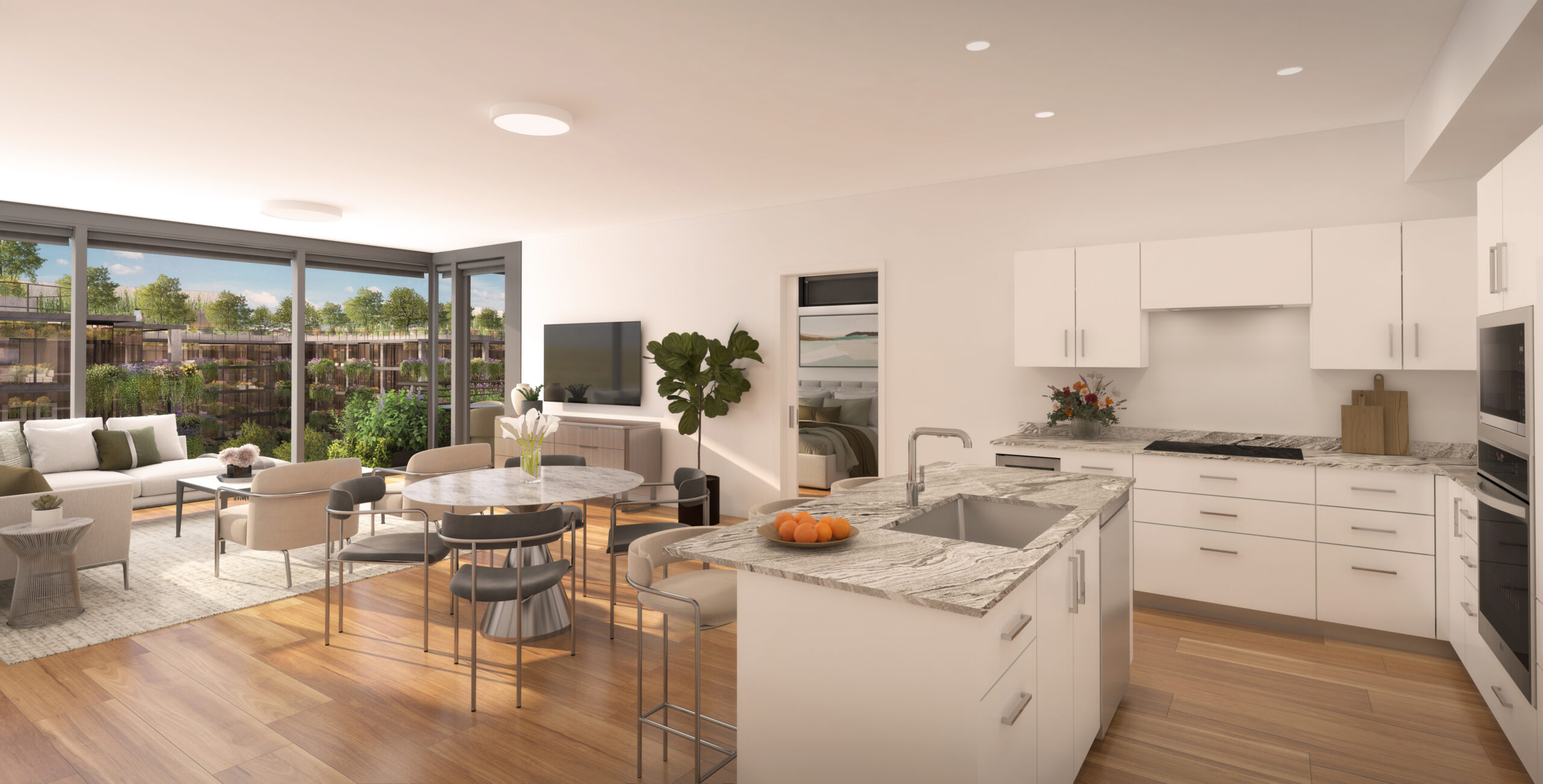
The best part of desert-smart planting is how seamlessly it fits Optima living: prep in your light-filled kitchen, step onto a shaded terrace for golden-hour watering, and enjoy color, fragrance, and visiting pollinators all winter long—with far less maintenance and water. If you’re new to container gardening, your Optima management team can share any community guidelines for plants and irrigation accessories. Then it’s just you, the view, and containers that carry the season forward—quietly, beautifully, and sustainably.


A Sonoran Take on Fall Flavors

When autumn arrives in Scottsdale, the desert doesn’t burst into color so much as it exhales: cooler mornings, softer light, and extraordinary weather that practically insists you take your coffee outside. For residents of Optima Kierland Apartments®, Optima Sonoran Village®, and Optima McDowell Mountain® it’s the perfect season to bring Sonoran flavors into everyday cooking and casual gatherings. Here’s how four regional essentials can make your fall feel distinctly (and deliciously) desert.

Prickly Pear: bright, cool, and unmistakably Sonoran
Prickly pear (the vibrant magenta fruit of the cactus) brings tart-sweet freshness to fall. Stir a spoonful of prickly pear syrup into sparkling water with a squeeze of lime for a rooftop mocktail that looks like sunset in a glass. For dinner, whisk the syrup with olive oil, apple cider vinegar, and a pinch of sea salt for a jewel-toned vinaigrette over arugula, citrus, and toasted pepitas. Hosting a small gathering in a residents’ lounge? Brush prickly pear glaze onto roasted chicken or cauliflower steaks for a glossy, subtly sweet finish that pairs beautifully with mesquite cornbread.

Downtown Scottsdale. Credit: cobalt123 on Flickr Creative Commons, licensed under CC BY-NC-SA 2.0.

Chiltepin: the desert’s tiny burst of heat
Often called the “mother of all peppers,” chiltepin is a tiny, wild chili with a quick, clean heat that spikes then fades. Use it as a finishing note rather than a base—crushed over avocado toast, flicked onto pumpkin soup, or stirred into warm olive oil for a drizzle over flatbreads from your kitchen oven. For outdoor evenings, mix a pinch of ground chiltepin with flaky salt and lime zest to rim glasses for agua fresca or a margarita. Prefer sweet-heat? Steep a few chiltepin in honey, then drizzle over grilled peaches or a cheese board. Start sparingly; a few berries deliver plenty of personality.

Pumpkin, Sonoran Style
Yes, pumpkin belongs in the desert, too—especially when you lean into Southwestern pairings. Toss wedges of pumpkin (or kabocha) with olive oil, agave, and a whisper of chiltepin; roast until caramelized and finish with queso fresco and cilantro. For a cozy weeknight, fold pumpkin purée into black beans with cumin and garlic, then spoon onto tostadas and top with pepitas and quick-pickled onions. Hosting friends? Serve a silky pumpkin-mesquite soup—blend roasted pumpkin with sautéed onion and garlic, vegetable broth, a touch of mesquite flour, and finish with lime crema and toasted pepitas.

Bringing It Home—Optima®-Style
Fall at Optima® communities is all about effortless indoor-outdoor living. Prep in your sleek, light-filled kitchen; then carry the party to a shaded terrace for golden-hour bites, or down to the grilling courtyard for a casual cookout under the palms. Keep your pantry stocked with a few Sonoran staples—mesquite flour, prickly pear syrup, dried chiltepin, and pepitas—and you can pull together a seasonal spread at a moment’s notice. Add soft textiles, a lantern or two, and your favorite playlist, and you’ve created the kind of easy, convivial evening that defines autumn in Scottsdale: warm, modern, and grounded in place.

Paws on the River: A Chicago “Canine Cruise” Perfect for Pet Families

At Optima®, we believe great city living includes our four-legged family members. That’s why we’re always scouting experiences that make life with pets richer, easier and more fun—especially for residents of Optima Lakeview® and Optima Signature® in Chicago. If you’ve been looking for a low-stress, high-delight outing with your pup, the Canine Cruise aboard Chicago’s First Lady is a joyful way to see (and sniff) the city from a fresh perspective.

What makes it such a hit? For starters, the cruise runs July through October on Saturdays and Sundays, and lasts a relaxed 90 minutes—plenty of time to take in skyline views without testing your dog’s attention span. Tickets start at $45 for general boarding, making it an easy add to your weekend plans. 

The experience is thoughtfully pet-forward. Your leashed companion is welcome from the moment you step on the Riverwalk dock, where you’ll find water bowls on board and open-air seating that guarantees everyone fresh breezes and unobstructed views. There’s also a full-service bar and snack bar for humans, plus well-appointed restrooms. (Pet parents with little ones in strollers will appreciate the free folded-stroller storage, too.) 

Once underway, the route highlights Chicago from river to lake with a lively narration that weaves together architecture, history and dog-friendly tidbits—a playful nod to the city’s storied built environment and lakefront culture. A special treat: you’ll pass through the Chicago Harbor Lock, feeling the vessel gently rise toward Lake Michigan and lower on the return—an engineering mini-thrill that’s as fascinating for first-timers as it is for lifelong Chicagoans. 

And because Chicago does seasonal joy so well, the cruise leans into autumn with a festive Howl-O-Ween Canine Cruise on the first two weekends of October. Expect pumpkin dog treats, a doggie costume contest and plenty of camera-ready moments (humans are encouraged to dress up, too). 

Credit: First Lady Cruises Facebook

A few practical tips make the day seamless. Arrive 30 minutes before departure so your whole party—pups included—can board without a rush. Cruises sail rain or shine, and kids under 4 ride free, which turns this into a multi-generational outing when friends or family are in town. Sunglasses and a cap keep the sun off as you gaze up at the skyline; outdoor seating is general admission and guaranteed. 

For Optima Signature® residents in Streeterville, the Riverwalk boarding location is an easy neighborhood adventure; Optima Lakeview® residents can hop on the CTA or a quick rideshare and be on deck in no time. Either way, it’s the kind of city day we love—design, community and the great outdoors converging in one effortless experience. The ticket office and boarding are along the Chicago Riverwalk near Michigan Avenue, with clear wayfinding and ADA guidance provided online if you need a ramped route. 

Why this pairs so well with Optima’s pet-friendly culture: our communities are designed to support the rhythm of everyday life with dogs—from easy in-and-out to neighborhood walks and playtime. The Canine Cruise adds a celebratory layer to that routine: a chance to connect with your dog, your city and fellow pet lovers, all while soaking in Chicago’s epic skyline.

Ready to make a memory with your best friend? Grab a leash, pack a few treats and set sail—your dog just found their new favorite way to do architecture and lake views. Visit the First Lady website for details and tickets.


SHIFT Happens: The 2025 Chicago Architecture Biennial

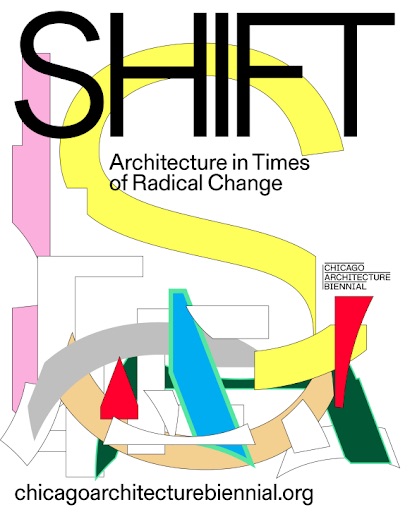
Chicago’s global conversation on design is about to dial up again. This fall, the Chicago Architecture Biennial (CAB) marks its ten-year anniversary with its sixth edition, SHIFT: Architecture in Times of Radical Change, running September 19, 2025–February 28, 2026. Led by Artistic Director Florencia Rodríguez—the Biennial’s first Latina artistic director—SHIFT invites the world to rethink how architecture responds to urgent social, cultural, and environmental transformations.

At Optima®, we’ve always believed that architecture is a living discipline—felt in light and space, but also in how people gather, heal, learn, and thrive. CAB’s 2025 theme aligns with that ethos, spotlighting topics like collective housing, material culture, ecologies, and migration—areas where design has tangible power to improve everyday life. In Rodríguez’s words, the Biennial aims to “create an archive of contemporary architecture to inform decision making, education, debate and collective thinking,” a charge that resonates with our own commitment to thoughtful, human-centered design. 

As in past editions, the Biennial’s hub will be the Chicago Cultural Center, where the central exhibition opens on September 19. From there, the city becomes a campus: galleries, schools, cultural institutions, and neighborhood sites will host projects and programs that extend the conversation far beyond the loop. And in a tradition we love, CAB is free and open to the public, making world-class design discourse accessible to everyone. For Optima® residents, that accessibility is more than philosophical—if you call Optima Lakeview® or Optima Signature® home, you’re perfectly positioned to make multiple visits and follow the story as it unfolds.

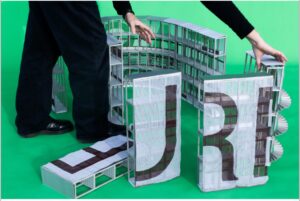
Care. Model of a project in the context of the course Building Pleasures 03, Project by Clara Della Casa, Elisa Cudré-Mauroux, Eva Dimarco, and Sascha Coston, Teaching team: Anna Puigjaner, Dafni Retzepi, Ethel Baraona Pohl, Lisa Maillard, Luis Úrculo, Pol Esteve Castelló, and He Shen, 2024. Image: Luis Úrculo, courtesy of Care.

What should you expect from SHIFT? Scale and diversity. CAB anticipates 100+ projects from 30 countries, assembling architects, artists, and designers whose work explores new housing models, re-uses materials thoughtfully, and reimagines urban ecologies. That global range is part of Chicago’s special role: the city’s own legacy—from Sullivan and Wright to Mies, Goldberg, and beyond—catalyzes bold experimentation and clear-eyed critique. The Biennial channels that legacy into a contemporary brief: design with empathy, act with urgency, and prototype ideas the public can experience, question, and carry forward. 

For Optima®, SHIFT also underscores a principle we practice daily: architecture is civic. It’s not just about beautiful forms or technical finesse (though we cherish both). It’s about systems—how buildings hold communities, how daylight and color shape well-being, how courtyards, terraces, and shared amenities prompt neighborly connection. The conversations at CAB—around housing, materials, and ecological thinking—mirror the questions we ask as we design places where people genuinely want to live.

If you’re planning your visit, start at the Cultural Center to catch the core exhibition and opening programs, then branch out to partner venues across the city as additional sites and events are announced. Consider multiple trips across the run: the Biennial unfolds in exhibitions, talks, films, publications, and pop-up events, and its citywide constellation rewards repeat exploration. And remember—admission is free, an open invitation to bring friends, family, and colleagues into the dialogue. 

Chicago has always been a proving ground where ambitious ideas meet real urban life. With SHIFT, the 2025 Chicago Architecture Biennial asks us to recalibrate—to imagine, together, what needs to change and how design can help us get there. We’ll be there, taking notes and taking it in. See you in the galleries—and on the streets—this fall.

Get all the details and curate your own adventure at the CAB website.

Optima McDowell Mountain® Apartment Floor Plan Spotlight: The 2 Bedroom + Den

An Inspired Layout for Modern Living
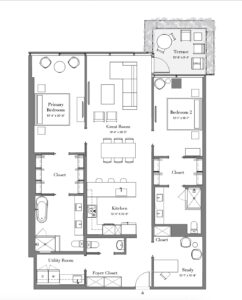
One of the most sought-after apartment residence configurations in the 7220 Optima McDowell Mountain® rental building is the 2 Bedroom + Den—a floor plan that strikes the perfect balance between open-concept design and defined, purposeful spaces. Ideal for those working from home, hosting out-of-town guests, or simply craving flexibility, this layout offers over 1,600 square feet of beautifully designed interior living.

Key Features:

  • Expansive great room with direct access to a private terrace, ideal for entertaining or relaxing against a desert sunset
  • Spacious kitchen with a large island, quartz countertops, and high-end stainless steel appliances
  • Primary suite with a walk-in closet and spa-like bath featuring a glass-enclosed shower
  • Secondary bedroom tucked away for added privacy, perfect for guests or family
  • A versatile den that easily functions as a home office, library, yoga nook, or creative studio
  • Full-size washer and dryer, ample closet space, and smart home-ready tech throughout


This floor plan is the embodiment of Optima®’s design ethos: efficient yet expansive, modern yet warm, private yet connected. Whether you’re a couple, a young family, or a remote professional seeking serenity and space, the 2 Bedroom + Den delivers a flexible, elegant foundation for desert living.

The Optima McDowell Mountain® Lifestyle—In Every Apartment Layout
No matter which apartment residence layout you choose at 7220 Optima McDowell Mountain®, you’re embraced by the same extraordinary community experience. From thoughtfully curated amenities and beautifully landscaped indoor-outdoor spaces to resident programming that brings neighbors together, life at Optima McDowell Mountain® is defined by ease, connection, and well-being. Add to that signature Optima® service—responsive, professional, and detail-oriented—and you’ll find that every rental home here is more than a floor plan; it’s a seamless lifestyle where everyday living feels elevated.

This floor plan is the embodiment of Optima®’s design ethos: efficient yet expansive, modern yet warm, private yet connected. Whether you’re a couple, a young family, or a remote professional seeking serenity and space, the 2 Bedroom + Den delivers a flexible, elegant foundation for desert living.

Interested in renting? For availability, pricing, and virtual tours, visit our floor plans page.


Balancing Energy and Design: Current Trends in Feng Shui

In recent years, the ancient Chinese art of feng shui has found renewed relevance, evolving to meet the needs of a modern, fast-paced world. Rooted in the idea that the arrangement of our surroundings influences the flow of qi—or life force—feng shui offers both a design philosophy and a way of living that prioritizes harmony, vitality, and connection. At Optima®, where architecture is conceived as a seamless blend of form and function, many of today’s most prominent feng shui trends align closely with our own design principles.

Biophilic Elements for Energy Flow
One of the strongest trends in contemporary feng shui is the incorporation of nature to encourage balance and rejuvenation. This is especially visible in the use of plants, water features, and natural materials to create a vibrant indoor environment. In feng shui, these elements help activate positive energy and create a bridge between interior spaces and the natural world.

Optima®’s communities—whether it’s the lush, green courtyards of Optima Kierland Apartments® or the serene pool decks of Optima Signature®—are designed with this principle in mind. Here, biophilic design doesn’t just bring nature indoors; it integrates greenery into the building’s structure, ensuring that residents experience nature as a daily, effortless part of life.

Light as a Vital Energy Source
In feng shui, light represents the strongest form of yang energy, enhancing vitality, clarity, and warmth. Modern practitioners emphasize maximizing natural light, using it not only to illuminate but to energize.

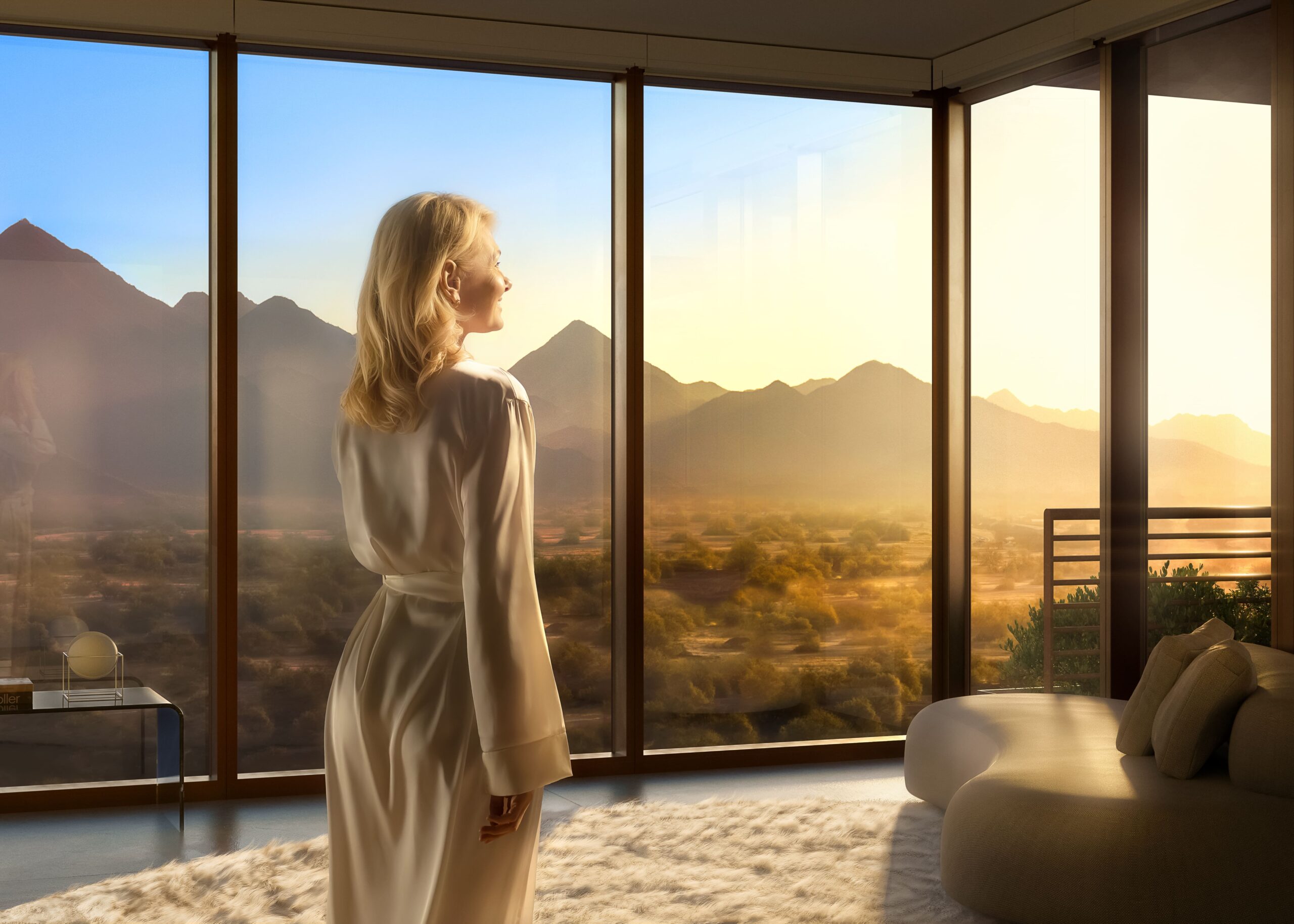
This is a philosophy deeply embedded in Optima®’s approach to architecture. Expansive floor-to-ceiling windows, open floor plans, and thoughtful building orientation capture and diffuse sunlight throughout the day. Whether it’s the soft morning light in a Wilmette residence at Optima Verdana® or the dramatic desert sunsets seen from an Optima Sonoran Village® terrace, the design supports the feng shui belief that light is as essential to our well-being as air and water.

Residents at Optima Signature® take in skyline views while enjoying access to indoor and outdoor heated pools year-round, making every day feel like a restoring retreat from the hustle of the city.

Decluttering as a Design Mindset
Minimalism and feng shui share common ground in advocating for spaces free of unnecessary clutter. In feng shui, clutter obstructs the natural flow of qi, while minimalism uses open, purposeful spaces to create a sense of calm and order.

At Optima®, interiors are intentionally designed to allow residents to move freely and to furnish their spaces in ways that reflect personal meaning rather than excess. Built-in storage solutions and thoughtful spatial planning provide both aesthetic and energetic clarity, echoing the feng shui principle that the most powerful rooms are those with breathing space.

Balanced Color Palettes
Color plays a central role in feng shui, with each hue corresponding to one of the five elements—wood, fire, earth, metal, and water. Current trends embrace softer, nature-inspired palettes to promote tranquility, accented with purposeful pops of color to encourage specific energies, such as prosperity (greens), passion (reds), or stability (browns).

Optima® applies a similarly thoughtful approach to color, ensuring that palettes work in harmony with the building’s environment. For example, desert-inspired neutrals and earth tones complement the Arizona landscape, while in Chicago, deeper tones may contrast against the skyline while still maintaining balance within interiors and shared spaces.

Flow and Connectivity
Perhaps the most universal principle linking modern feng shui to Optima®’s architectural philosophy is the concept of flow. In feng shui, pathways—both physical and energetic—should be unobstructed, guiding movement and vision effortlessly through a space.

Optima® designs prioritize this same sense of flow. From sightlines that draw the eye toward nature or artwork, to communal areas that encourage organic movement and social connection, every element is positioned to create ease and continuity.

In today’s design landscape, feng shui is not about rigid rules or decorative superstitions—it’s about creating environments that feel alive, supportive, and in tune with the people who inhabit them. This modern interpretation mirrors Optima®’s own belief that architecture should enhance quality of life through thoughtful integration of space, light, color, and nature. By weaving together ancient wisdom and contemporary innovation, both feng shui and Optima®’s design philosophy remind us that when our environments are in balance, our lives are too.

Designing for the Mind: The Emerging Field of Neuroarchitecture

At Optima®, our communities are guided by a deep belief that architecture can nurture, inspire, and elevate the human spirit. This philosophy has long aligned with Modernism’s embrace of light, space, and form. Today, a growing field of study known as neuroarchitecture is helping to explain, through the lens of science, why certain spaces make us feel calm, creative, or connected.

What is Neuroarchitecture?
Neuroarchitecture sits at the intersection of neuroscience, psychology, and architecture. It seeks to understand how the built environment influences brain function and emotional well-being. Using tools like functional MRI scans, eye-tracking studies, and biometric sensors, researchers can observe how different architectural elements—light, ceiling height, materials, spatial flow—affect cognitive performance, stress levels, and even hormone production.

At its core, neuroarchitecture is about recognizing that our brains are not passive observers of space. Instead, they are actively shaped by it. This emerging field offers a scientific foundation for what architects and designers have long intuited: the spaces we inhabit affect how we think, feel, and behave.

At Optima Lakeview®, the amenity spaces are integrated into the voluminous center atrium, providing beautifully designed, flowing spaces to gather or seek quiet moments.

The Brain’s Response to Space
Research in neuroarchitecture reveals that certain design features can measurably influence brain activity. For example:

  • Natural Light: Exposure to daylight regulates our circadian rhythms, boosts serotonin, and can enhance mood and productivity.
  • Ceiling Height: Taller ceilings have been linked to more expansive thinking, while lower ceilings can promote focus and concentration.
  • Nature Integration: Biophilic design—bringing natural forms, materials, and greenery into a space—reduces stress and promotes cognitive restoration.
  • Spatial Flow: Open, interconnected layouts encourage movement, social interaction, and a sense of freedom.

These findings are helping architects make more informed decisions, creating spaces that are not only beautiful but also neurologically supportive.

A New Lens on Modernist Principles
Modernist architecture, with its emphasis on functional beauty, open floor plans, and abundant light, often aligns naturally with neuroarchitectural insights. In Optima® communities, expansive windows flood interiors with daylight, green courtyards and gardens bring nature to residents’ doorsteps, and thoughtful spatial layouts encourage both solitude and connection.

For example, the lush vertical landscaping at Optima Sonoran Village® is not only visually striking—it offers residents a daily, tangible connection to the calming effects of nature. At Optima Verdana®, the indoor–outdoor flow of common spaces provides social engagement opportunities while supporting mental ease and relaxation.

Applications Beyond Residential Design
Neuroarchitecture’s potential extends far beyond homes. In schools, its principles can help create environments that improve focus and learning outcomes. In healthcare, design elements informed by neuroscience can reduce patient anxiety and promote faster recovery. Even in workplaces, carefully tuned lighting, acoustics, and layouts can enhance creativity, collaboration, and employee well-being.

The Future of Building for the Brain
As technology enables us to measure and analyze human responses to space with increasing precision, neuroarchitecture is likely to become an essential part of the design process. Architects and developers will have more data-driven insights to tailor environments to specific human needs—whether that’s reducing stress, encouraging collaboration, or sparking innovation.

For Optima®, this convergence of science and design reinforces a long-held commitment: that great architecture is not just about form, but about the lives lived within it. Neuroarchitecture offers a language and framework for understanding the deep connection between space and self—a connection we have been honoring through Modernist design for decades.

In the end, neuroarchitecture doesn’t replace the artistry of building; it enriches it. By aligning the principles of design with the biology of the brain, we can create spaces that are not only aesthetically compelling, but also profoundly supportive of human well-being—places where people don’t just live, but truly thrive.

Modernist Artists in Post-Independence India

At Optima®, our approach to architecture is deeply informed by the ethos of Modernism—its commitment to experimentation, clarity of form, and the seamless integration of art, design, and life. Rooted in the legacy of mid-century innovation, we’re continually inspired by how Modernist principles adapt across cultures and disciplines. One particularly striking expression of this spirit unfolded in post-independence India, where a generation of artists reimagined Modernism to reflect the unique rhythms and aspirations of a newly sovereign nation.

In 1947, as India gained independence, a cohort of bold, visionary artists stepped forward to redefine what Indian art could be. They turned to Modernism not as a Western export, but as a global framework they could shape to reflect their own histories, myths, and modern realities.

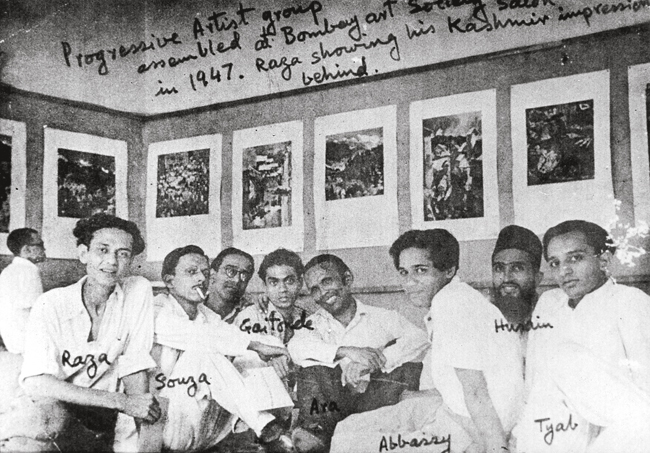
Leading this charge was the Progressive Artists’ Group (PAG), formed in Bombay the same year as independence. Founders F.N. Souza, M.F. Husain, S.H. Raza, K.H. Ara, and others set out to dismantle the conservative aesthetics of colonial-era realism and the romantic nationalism of the Bengal School. Instead, they embraced expressive forms, experimentation, and an inclusive visual language that engaged with both local culture and international art movements.

F.N. Souza in London, 1955. Credit: Thurston Hopkins, New York Times, public domain.

Drawing influence from artists like Cézanne, Picasso, and Modigliani, PAG members crafted a synthesis of East and West. Their subjects ranged from mythology and folklore to the emerging complexities of urban life. Souza’s bold, confrontational figures critiqued religious orthodoxy and societal repression. Husain’s dynamic compositions brought ancient epics into dialogue with contemporary India. Raza, based in Paris, gradually distilled his visual language into symbolic abstraction, often centered on the bindu—a powerful motif from Hindu cosmology symbolizing origin and unity.

Outside the PAG, Modernism continued to flourish in diverse forms. Tyeb Mehta’s stark, gestural figures conveyed emotional intensity and meditations on violence and partition. Nasreen Mohamedi, now recognized as a pioneer of global minimalism, created intricate linear compositions that were at once architectural and deeply personal. Her disciplined abstractions—rooted in Islamic geometry and Indian visual tradition—prefigured global conversations around structure, space, and silence.

Institutions like the Baroda School further expanded the movement’s reach. Artists such as K.G. Subramanyan championed a dialogue between craft and fine art, nurturing a generation of creators who saw no boundary between tradition and experimentation.

Collectively, these artists forged a truly Indian Modernism—at once cosmopolitan and grounded, spiritual and secular, experimental and enduring. Their work spoke not only to the conditions of a newly independent nation but also to broader questions of identity, form, and cultural synthesis.

Today, this legacy is being recognized anew, with major exhibitions and global institutions reevaluating India’s contribution to 20th-century art. At Optima®, we find resonance in their visionary spirit—their ability to honor the past while fearlessly forging a new path. Just as these artists integrated tradition with innovation, we continue to explore how modern design can elevate everyday experience while responding meaningfully to place and culture.

Riding the Rails of Time: A Brief History of the Chicago “L”

To know Chicago is to know the “L”—a beloved, bustling fixture of city life that rumbles overhead and snakes underground, connecting neighborhoods and stories across more than a century. Short for “elevated,” the “L” isn’t just a transit system. It’s an enduring emblem of Chicago’s ingenuity, resilience, and urban identity.

At Optima®, we understand how essential great transportation is to vibrant city living. That’s why communities like Optima Lakeview® and Optima Signature® are conveniently located near key “L” lines, giving residents seamless access to everything the city has to offer—whether it’s a quick ride downtown to work or a weekend trip to the Garfield Park Conservatory.

Born from Innovation—and Necessity
The origins of the “L” date back to the late 19th century, when Chicago was growing at breakneck speed. After the Great Fire of 1871, the city underwent a massive rebuilding and expansion effort. But with growth came congestion: horse-drawn streetcars and cable cars clogged the streets, and pedestrians competed with carts, carriages, and early automobiles. The city needed a new way to move people quickly and efficiently—without taking up precious surface space.

Enter the elevated train.

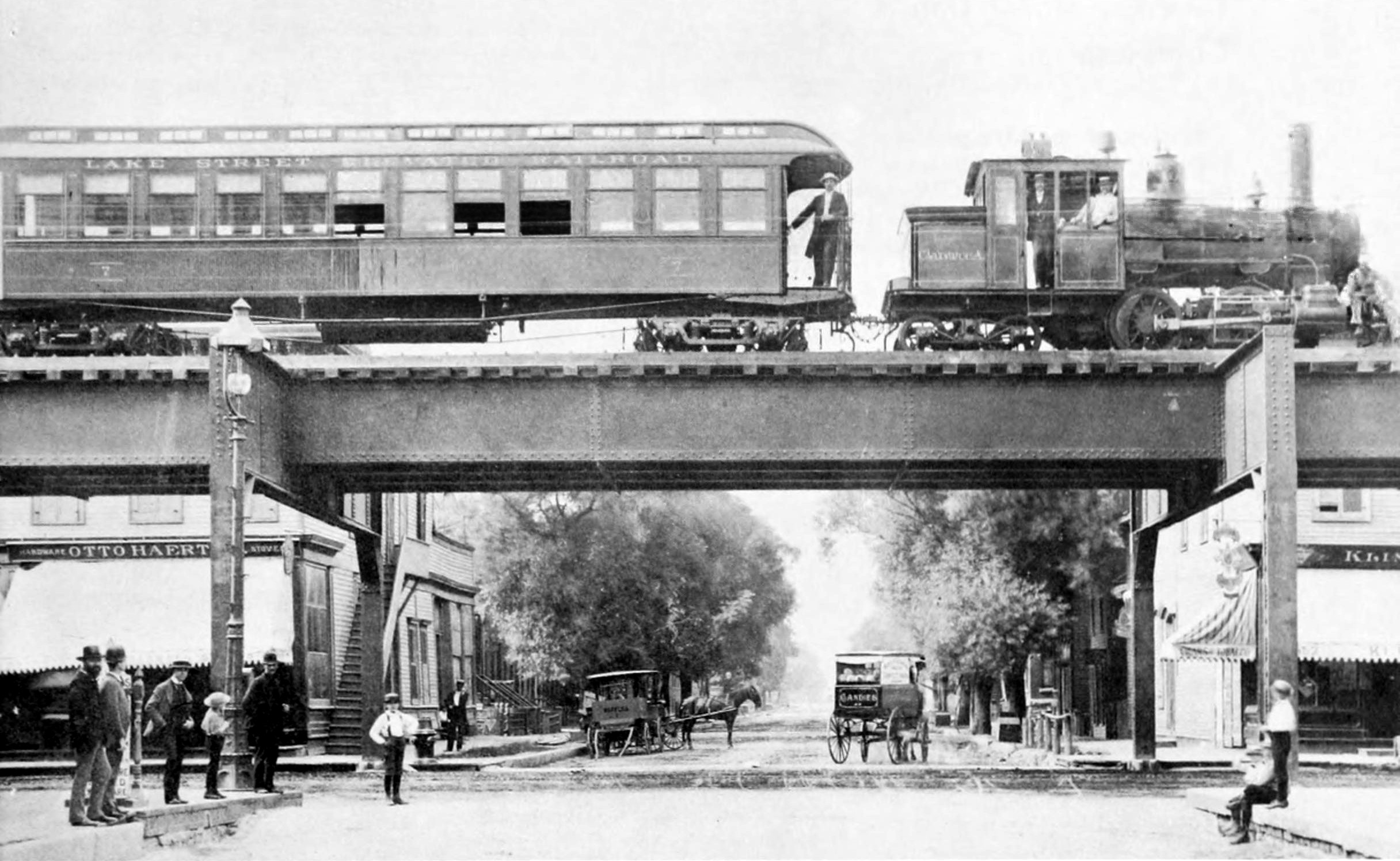
On June 6, 1892, the first “L” train made its inaugural run along the South Side Rapid Transit line, carrying passengers from 39th Street to Congress Street in wooden cars powered by steam locomotives. Though the ride was loud, dirty, and a bit jarring, it offered an exciting new alternative: a bird’s-eye commute through the city.

By the turn of the century, electric power had replaced steam, and the “L” had begun to form its now-familiar loop downtown. In 1897, a series of elevated lines were linked by a rectangular circuit known as the “Union Loop,” giving the central business district its nickname and the system a structural heart.

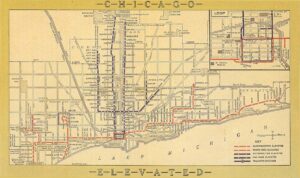
Map of elevated rapid transit lines in Chicago. Contains lines run by four companies; the Metropolitan West Side Elevated Railroad, South Side Elevated Railroad, Northwestern Elevated Railroad, and Oak Park Elevated Railroad. Credit: https://www.chicago-l.org/maps/route/maps/1913map.jpg

The Loop: More Than a Track
The creation of the Loop helped define downtown Chicago itself, transforming transit in the process. Architecturally and socially, the Loop became a boundary and a bridge. It concentrated commerce, created a gravitational pull for development, and gave the city its skyline rhythm—steel girders and train cars cutting across sun-drenched streets.

Over time, the “L” evolved into a system of color-coded lines that stretch from Evanston to the South Side, from Oak Park to O’Hare. The system remains one of only a few in the U.S. that still includes elevated tracks in the urban core.

For residents of Optima Lakeview®, nestled in a neighborhood rich with character on Chicago’s North Side, the nearby Brown Line offers a direct route to the Loop—perfect for daily commutes or weekend adventures. Meanwhile, Optima Signature®, located in the heart of Streeterville, puts residents just steps away from multiple “L” stops and transit hubs, making it easy to explore every corner of the city.

Moments of Modernization
The 20th century brought dramatic change to the “L.” Wooden cars gave way to streamlined steel ones. Manual controls were replaced by automatic signals. The system expanded, integrating suburban commuter services and adopting new lines to meet the needs of a shifting population.

Notably, the 1950s saw the launch of the Congress Line, which ran down the median of the newly built Eisenhower Expressway—a pioneering combination of rail and highway planning. The 1980s and 1990s ushered in renovations to aging stations, and the naming system changed to colors in 1993, simplifying what had become a complex array of named lines.

Today’s “L” is a 24/7 operation—one of the few major urban rail systems in the world to run all day, every day.

Cultural Icon, Civic Backbone
More than just infrastructure, the “L” is a character in the story of Chicago. It’s been immortalized in films like The Fugitive and While You Were Sleeping, and it’s a regular presence in television shows like Chicago P.D. and Shameless. Its stations and cars have hosted jazz musicians, protestors, lovers, tourists, and tired workers heading home.

It’s a place of overheard conversations, lost gloves, spontaneous poetry, and democratic density—where millionaires and minimum-wage workers share space and time, bound by steel rails and a common destination.

Looking Forward
In recent years, the Chicago Transit Authority (CTA) has invested heavily in modernization. Projects like the Red & Purple Modernization Program aim to replace century-old infrastructure and increase capacity. Plans are also underway to extend the Red Line further south, connecting communities that have historically been underserved by public transit.

And while challenges remain—aging infrastructure, funding gaps, and fluctuating ridership—the “L” continues to adapt. It has survived two world wars, the Great Depression, the rise of the automobile, and the COVID-19 pandemic. Each time, it has emerged with new relevance.

A Ride Worth Taking
For newcomers, the “L” can feel like a puzzle: clattering tracks, cryptic transfers, platforms suspended above intersections. But to longtime Chicagoans, it’s second nature—a steady, familiar hum in the background of daily life. It’s not just how they get from place to place. It’s part of where they’re from, ensuring the city’s culture, commerce, and creativity are always within reach.

An Evening of Music Under the Stars: Evanston Symphony Orchestra’s Summer Pops Concert Returns to the Wallace Bowl

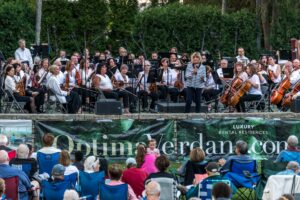
There’s something magical about live music on a summer evening—especially when it’s free, family-friendly, and performed in one of the North Shore’s most scenic outdoor venues. On Tuesday, August 19, 2025, the Evanston Symphony Orchestra returns to Wilmette’s iconic Wallace Bowl for its annual Summer Pops Concert, presented with pride by Optima Verdana®.

This cherished community tradition brings neighbors together for an unforgettable night of music under the open sky in Gillson Park. With no tickets or reservations required, the concert is free and open to all—inviting families, friends, and music lovers to gather and enjoy a joyful celebration of summer and sound.

Eileen Hovey, Optima® Cofounder and CEO, makes opening remarks at the Evanston Symphony Orchestra’s Summer Pop Concert in 2023. Credit: Evanston Symphony Orchestra.

A Spirited and Sophisticated Program
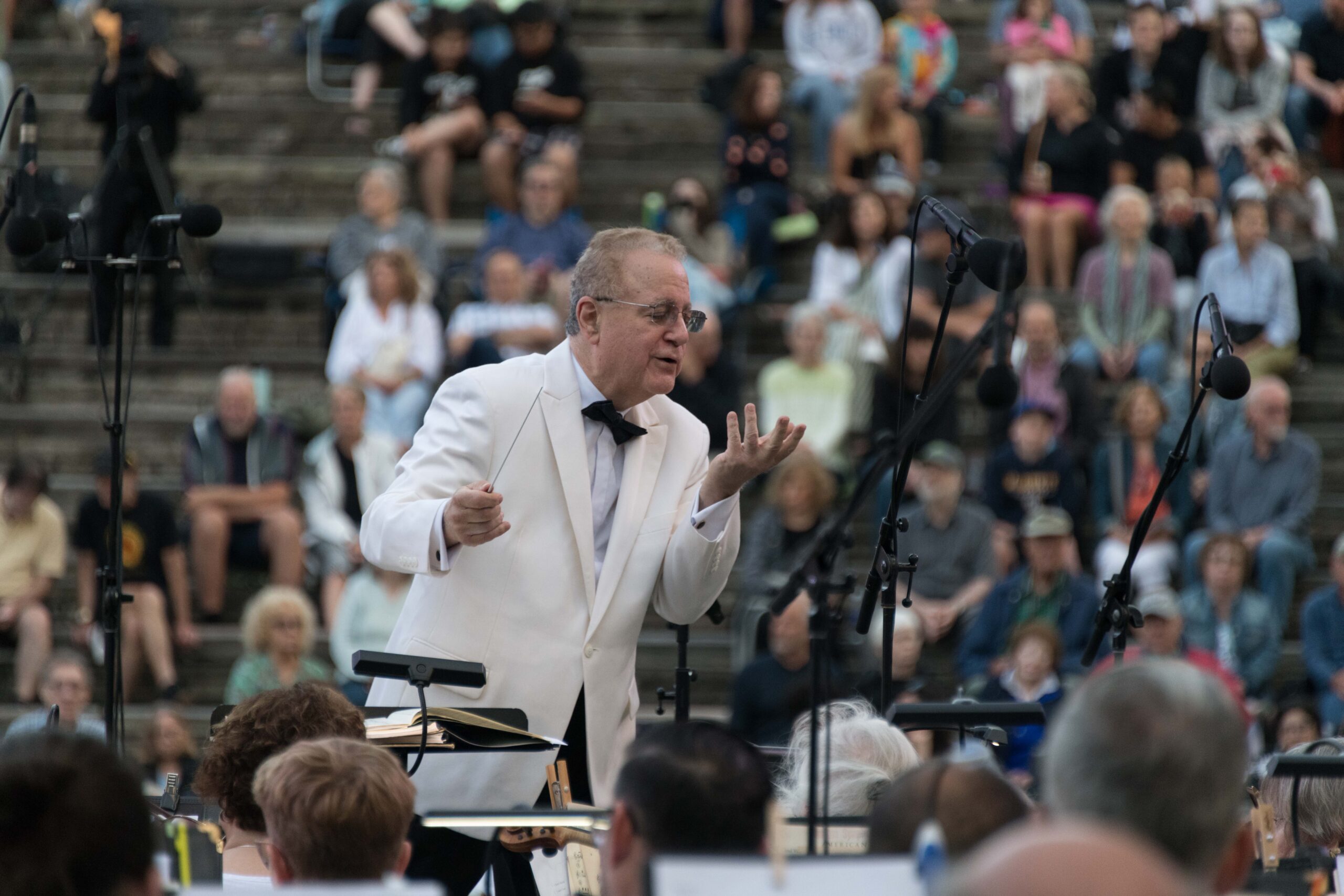
Under the baton of Music Director Lawrence Eckerling, the Evanston Symphony will perform a vibrant and varied program that blends classical elegance with Broadway flair, cinematic power, and Motown soul:

  • Rossini – Overture to The Barber of Seville
  • Strauss Jr. – Artist’s Life Waltzes, Op. 316
  • Tyzik – Hot Soul Medley featuring hits like I Heard It Through the Grapevine, My Girl, Touch Me In The Morning, Reach Out I’ll Be There, and Love Machine
  • Saint-Saëns – Bacchanale from Samson and Delilah
  • Schwartz / arr. Ricketts – Highlights from Wicked including No One Mourns the Wicked, The Wizard and I, Dancing Through Life, Popular, and Defying Gravity
  • John Williams – Theme from Schindler’s List (featuring Julie Fischer, violin)
  • John Williams – Imperial March from The Empire Strikes Back
  • Sousa – Stars and Stripes Forever

With iconic crowd-pleasers, lush orchestral works, and a toe-tapping soul medley, the evening promises something for everyone—whether you’re a classical music enthusiast, a Broadway fan, or just looking to enjoy a memorable night beneath the stars.

You can watch and listen to a preview of the Summer Concert from Maestro Eckerling here: https://www.youtube.com/watch?v=OXbzwASPDyE

A Beloved Setting with Deep Community Roots
The Wallace Bowl, nestled within Gillson Park, is a treasured open-air amphitheater that has hosted generations of performances since its construction in 1931. Surrounded by trees and located just steps from Lake Michigan, it offers a unique and intimate atmosphere that amplifies the magic of live music.

Presented by Optima Verdana®
Just minutes away from the Wallace Bowl, Optima Verdana® is proud to sponsor this year’s concert as part of its ongoing support of local arts and community engagement. For Optima Verdana® residents, the performance is both a musical event and a celebration in their own backyard.

The concert begins at 7:00 PM, and attendees are encouraged to bring lawn chairs, blankets, and picnic baskets for a relaxed evening of entertainment.

Whether you’re discovering the Evanston Symphony for the first time or returning for a favorite summer tradition, this night of music by the lake is not to be missed.

ESO is partnering with Baker Demonstration School, which will provide fun child activities before and during the concert, including an instrument petting zoo.


person name goes here

Maintenance Supervisor

Glencoe, IL


    Acceptable file types: *.pdf | *.txt | *.doc, max-size: 2Mb